A more usable workspace
For glare, identify the screen or seating position and the hours affected. Compare suitable film samples for brightness and visibility, not simply how dark they look from the street.

Window film for business premises
Reduce glare, screen private areas and choose the right treatment for your business glass.
Choose solar-control, privacy, branding or safety film for your office, shop or reception. Car Tinting Heroes checks the glass, coverage and site access, then explains the suitable product and fitting requirements.
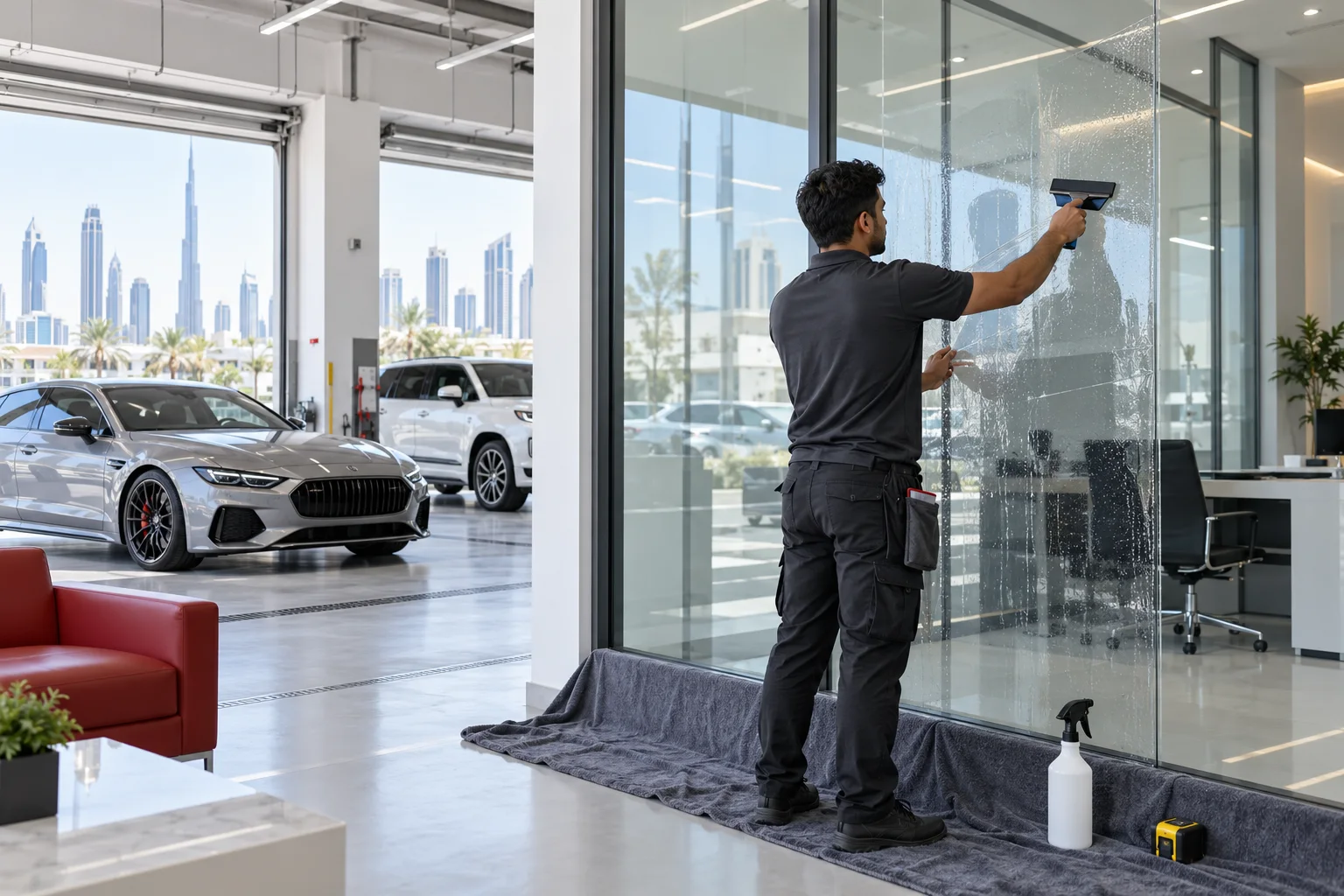
Choose the result you need
Begin with the main issue. Your quotation can combine different treatments on different panes without forcing one finish across the whole premises.
Indicative privacy-film allowances start at AED 55 per m² for selected straightforward finishes. Final pricing depends on the product and project. Compare the estimated ranges and exclusions.
Compare like-for-like quotations
Checked 24 October 2026. These are unconfirmed planning estimates, not a current Car Tinting Heroes tariff. Ask for a dated, product-specific installed quote before ordering.
| Service | Budget allowance | Confirm before ordering |
|---|---|---|
| Frosted privacy film | AED 55 to 95 | Plain, gradient or cut finish and coverage |
| Reflective privacy film | AED 60 to 150 | Film grade, glazing and fitting side |
| Opaque blackout film | AED 80 to 120 | Approved material and loss of daylight |
| Custom branding film | AED 100 to 200 | Artwork, printing or cutting and installation |
| Performance solar-control film | Product-specific quote | Required appearance, film data and glazing |
| Safety film and attachment | System-specific quote | Film, glass, frame, test requirements and attachment |
Compare quotations in AED per m² of treated glass. One m² is approximately 10.764 ft². Multiply an AED per ft² rate by 10.764 to compare it with an AED per m² rate. Ask whether the charge uses actual covered area, full panes, material wastage or a minimum billable area.
Ask for separate lines for old-film removal, adhesive cleanup, access equipment and its operator, permits, parking, artwork and out-of-hours work. Confirm who arranges building access, protects equipment and moves furniture. These items are not automatically included in an area rate.
A fixed minimum job value and survey fee are not published here. Confirm both before arranging a visit, including whether a survey charge is credited against installation. Ask for the total including VAT. Small jobs can cost more than area multiplied by a guide rate.
Use the estimates to discuss the budget. The final quotation must identify the available material, fitting requirements and current total for your project.
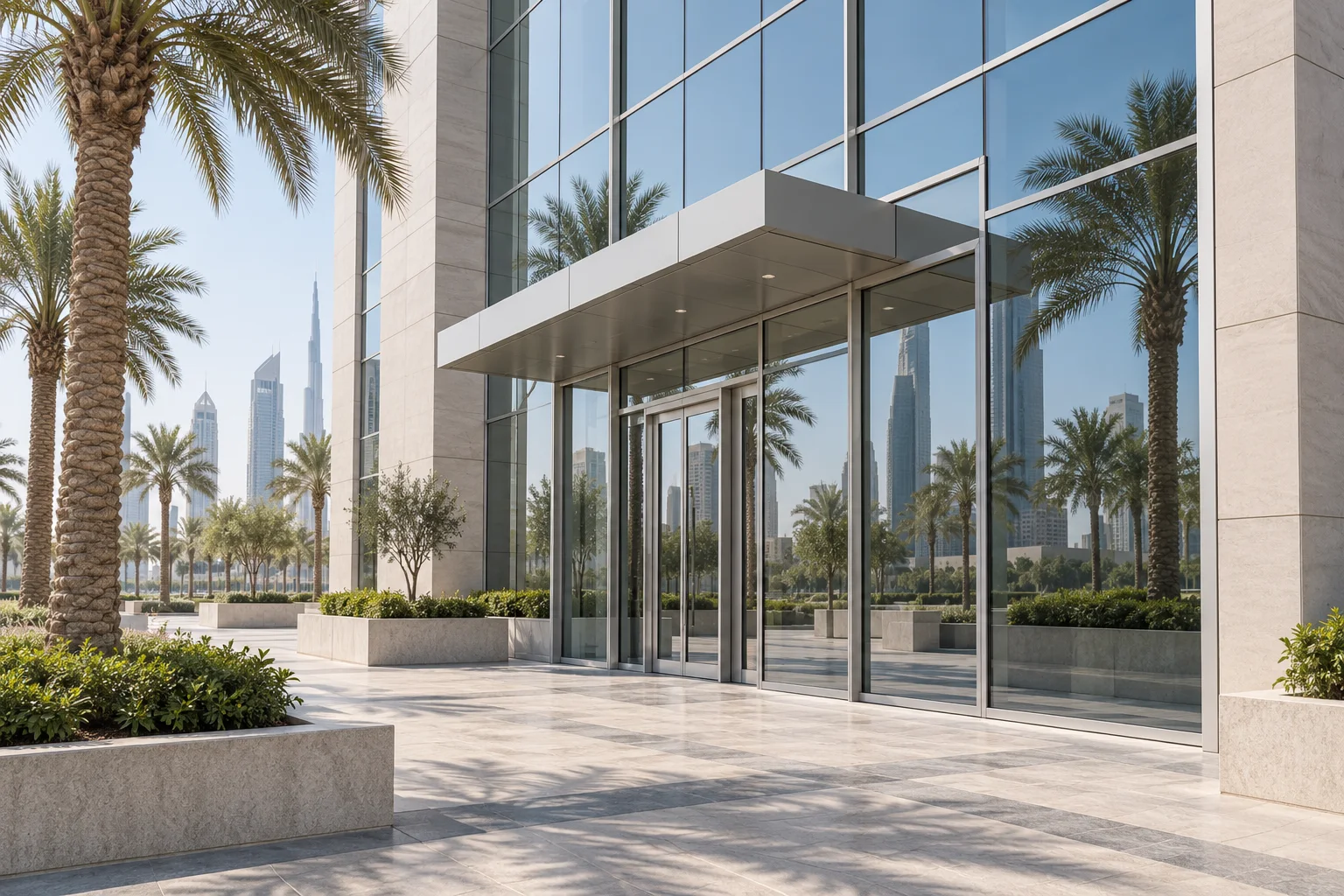
Heat and glare
Solar-control films can reduce solar heat gain and glare through suitable glazing. Compare a lighter appearance, a neutral tint or a reflective finish around the daylight and exterior look you want to retain.
Solar protection is not a substitute for diagnosing a faulty air-conditioning system. Tell us which windows cause discomfort and the time of day it happens, so the discussion starts with the affected areas.
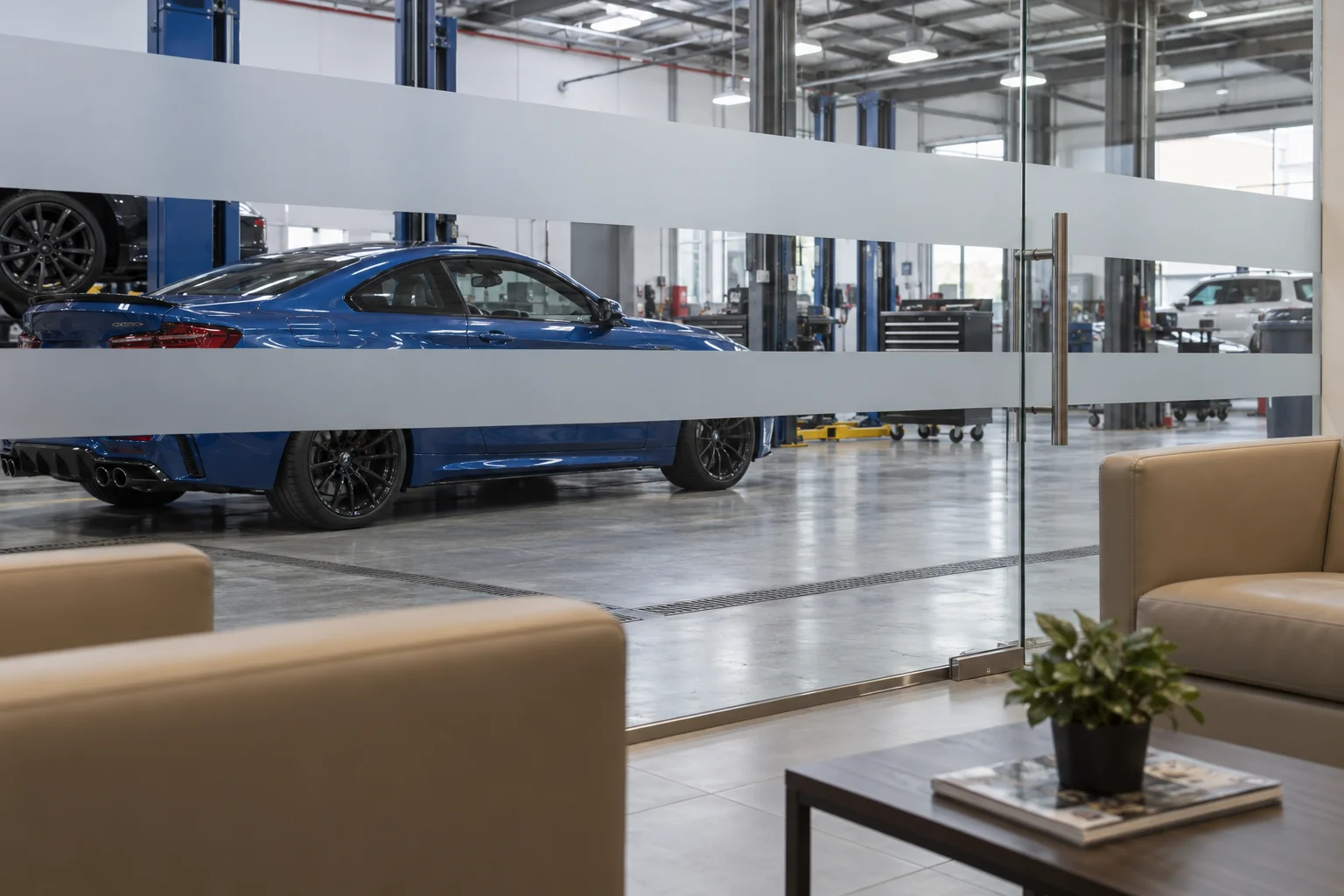
Privacy and concealment
Choose diffused light with frosted film, lighting-dependent daytime privacy with reflective film, or full concealment with opaque coverage. The choice depends on the view, daylight and working hours of each space.
A privacy finish does not soundproof a meeting room. If confidential conversations are the concern, include the room’s acoustic performance in the wider fit-out discussion.
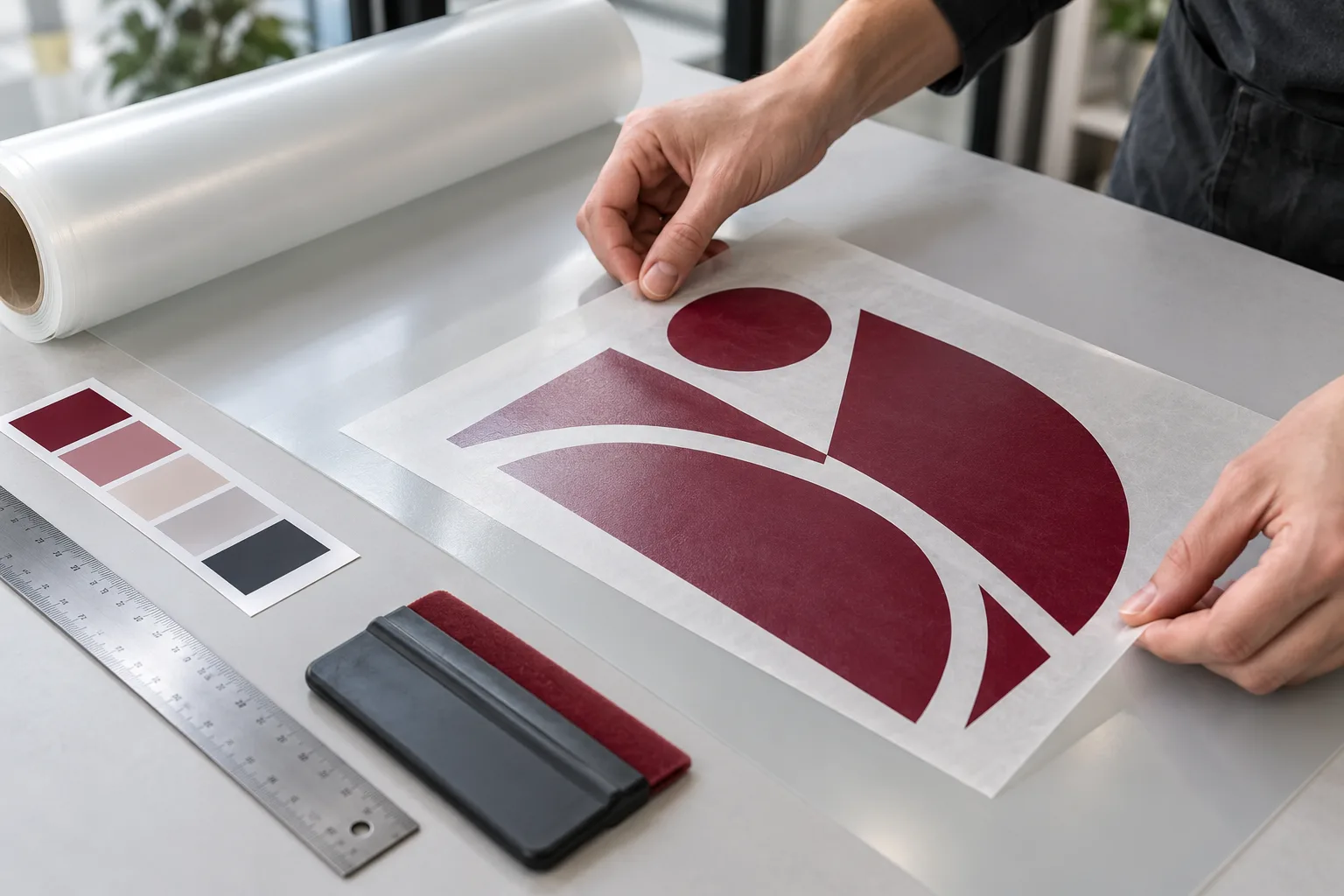
Branding and decorative glass
Plan logos, opening information, decorative bands or full glass graphics around your business identity. Confirm whether the design is viewed from outside, inside or both before artwork is produced.
For plain frosted bands, cut patterns or decorative finishes without a printed brand design, compare decorative vinyl window film options.
A logo cut out of frosted material creates a transparent opening. Keep it away from any area that needs continuous screening, and identify where customers should still see your products or reception.
Safety and glass retention
Discuss safety-film options against the glass, frame and intended application. Where an attachment system is required, it must be included in the specification and quotation, not treated as an optional finishing detail.
Film does not make glass unbreakable, bulletproof or a guaranteed barrier to entry. High-consequence requirements need a qualified assessment of the complete glazing and building arrangement.
Useful benefits with clear limits
Describe what a successful installation should change. This gives the sample review and handover a clear purpose.
For glare, identify the screen or seating position and the hours affected. Compare suitable film samples for brightness and visibility, not simply how dark they look from the street.
For screening, identify who can see in, what must be concealed and when the room is occupied. Check seated and standing views, nearby silhouettes and untreated gaps.
For graphics, use approved artwork and a pane schedule. Confirm matching colour, alignment and reading direction across doors and fixed glass before production.
Some solar films can reduce heat gain and UV transmission, but a laboratory figure is not a guaranteed reduction in your cooling bill or complete protection against fading. Ask for the actual product data and the glass used for the published test.
Survey the glass before choosing the roll
Glass construction and the proposed fitting surface come before colour or price. Two similar-looking panes can require different products.
Share the glazing schedule if you have one. If the specification is unknown, say so. The assessment should identify missing details rather than assume the glass is toughened, laminated or low-E. A qualified installer must review the proposed film and glass combination for thermal stress, using manufacturer guidance and referring uncertain or restricted combinations to the manufacturer before fitting. Photos alone do not confirm compatibility.
Show peeling edges, old graphics and adhesive residue. Removal and cleanup should be priced before new material is fitted. Do not assume layering films is acceptable or that stripping every coated surface is risk-free.
Make the survey useful for procurement and facilities
List the spaces separately. A reception frontage, an occupied office, a confidential meeting room and a stockroom should not share one automatic specification.
Ten panes measuring 1 m × 2 m have 20 m² of glass before agreed coverage adjustments. This example explains area only. Add the quoted film and fitting, agreed extras and VAT, while showing how any minimum charge is applied.
A site survey should resolve unknown glazing and access details. It is not automatically a free service or a guarantee that every proposed film is compatible.
Keep the project moving
Agree the outcome and responsibilities early so measuring, approvals and installation follow a clear sequence.
Send the business location, glass photos and approximate sizes. Explain the main issue, desired finish and preferred working hours. We’ll discuss the next assessment step and any site-survey arrangements.
Review the glazing, access and product options. Confirm what information is still needed. For safety work, identify the intended application and relevant system requirements before material selection.
Check appearance from both sides, with the room in normal use. Approve dimensions, graphics, coverage and the written work description. Keep one person responsible for final approval.
Agree protected areas and access routes. Prepare the glass using product-compatible methods, position the material, remove application moisture and finish edges according to the selected system.
Check coverage, alignment and the agreed finish. Receive the product records, cleaning guidance and warranty information. Discuss any curing-related appearance and the appropriate time for a follow-up check.
Tools matched to the work
Careful measurement and preparation matter as much as the film itself. The technique should follow the selected manufacturer’s instructions.
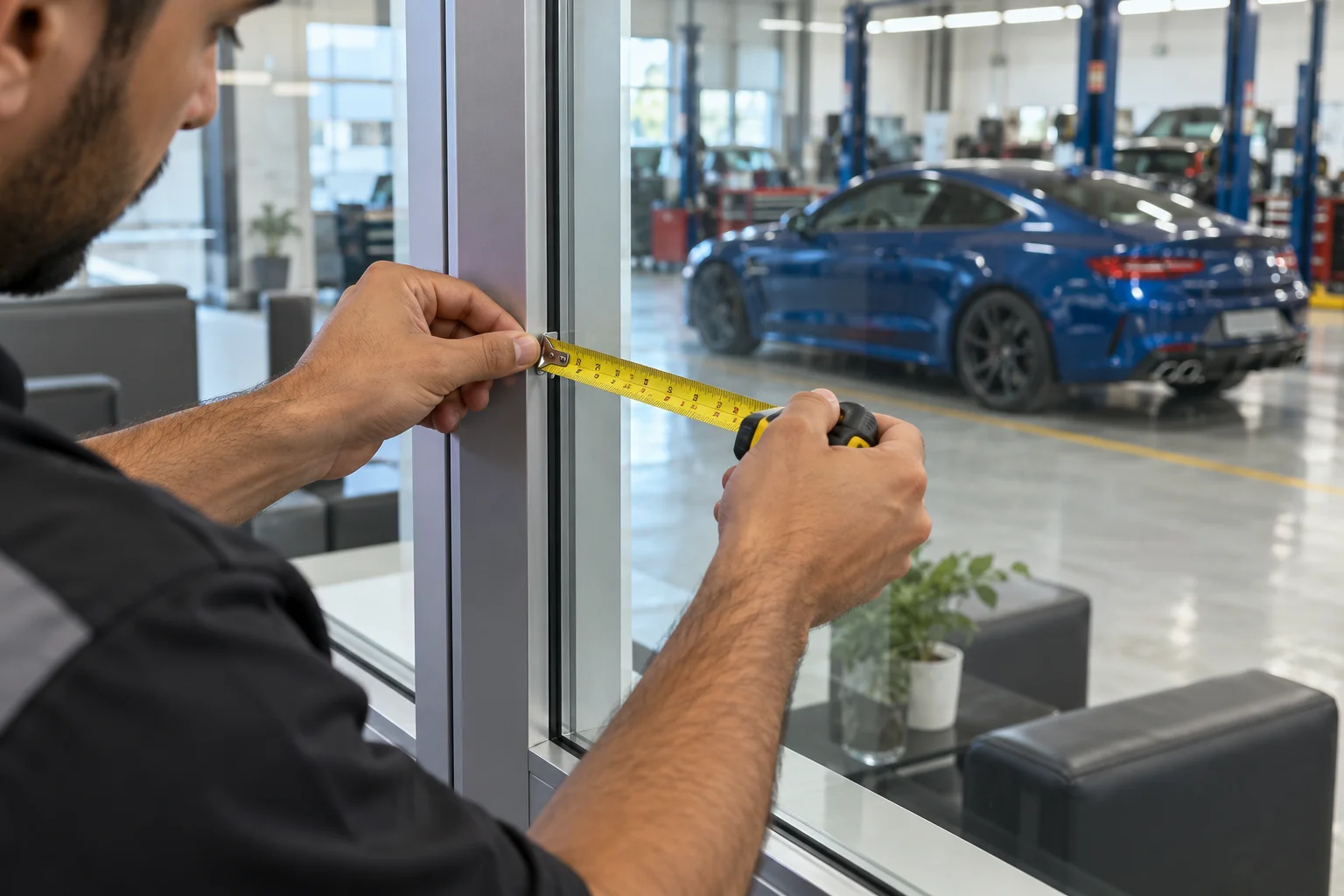
Measuring tools and a pane schedule keep dimensions, coverage and design alignment clear. Similar-looking windows may differ, so repeated sizes should be checked rather than assumed.
Surface protection, compatible cleaning materials and lint-controlled handling help prepare the working area. Existing coatings influence which tools and cleaning methods are appropriate.
Suitable application fluid and professional squeegee tools help position the material and remove moisture. Solution choice, pressure and finishing should match the film and adhesive system.
Cutting guides, edge inspection and any specified sealing or attachment complete the work. A decorative trim is not a substitute for a required safety-film attachment system.
Plan around normal operations
The size of the glass is only part of the installation plan. Tell us how the premises operates before agreeing a date.
Identify desks, equipment and meeting rooms that need moving or temporary isolation. Tell staff which panes will be worked on and agree who can provide access if rooms are locked.
Phased work may help keep other areas usable. Ask for the likely duration once the product, pane count and preparation have been reviewed, rather than relying on a universal same-day promise.
Explain trading hours, delivery times and customer routes. Graphics may need landlord or centre-management approval before production, especially if they change the outward-facing appearance.
Keep the design approval and access arrangements coordinated. A finished print is not useful if its dimensions, viewing direction or permitted fitting time have not been confirmed.
Identify the floor level, outside access and any equipment restrictions. Exterior products need suitable weather and working conditions, as well as the correct film-to-glass approval.
Interior access does not necessarily provide a safe route to the outside surface. Equipment, permits, supervision and building procedures should be agreed within the final work plan where applicable.
Approve on evidence
Useful installation evidence connects the finished result to the material and work you approved.
Keep dated pane photos, the problem being addressed, the glass information and the accepted quotation. For a design, retain the approved artwork with final dimensions.
Record the treated panes, supplied product, fitted side and agreed finish. Photograph the completed coverage and note any outstanding check or follow-up arrangement.
Ask what was measured, how it was measured and whether conditions were comparable. An attractive photograph alone does not prove an energy saving, a test rating or security performance.
When reviewing a previous commercial installation, look for a comparable glass type, product and application. General testimonials do not establish the specification or results of your project.
Care after handover
Give the cleaning team the actual product instructions and keep the installation records accessible.
Follow the supplied first-clean timing and approved cleaning method. Avoid applying a generic waiting period from another film. If the appearance changes during curing, ask the installer what is expected for that material and when it should be reviewed.
Confirm the provider, period, covered work and exclusions in writing. Separate film defects, fitting labour, thermal-stress breakage and insulated-glass seal failure. Check the existing glazing warranty and obtain any required manufacturer acceptance or registration before fitting. No blanket glass-breakage or sealed-unit warranty is promised here. Photograph lifting, scratches or an unexpected finish before trying a repair, and provide the installation details when reporting it.
A new tenant, layout or brand may require selective replacement or full removal. Agree any lease-end requirements before fitting. Removal, adhesive cleanup and reinstatement should be assessed separately instead of assumed to be included in the original installation price.
3M flat-glass warranty bulletin dated 1 March 2026 separates film, glass-breakage and seal-failure cover with eligibility conditions. It is a manufacturer reference, not confirmation of UAE coverage, stock or authorised-dealer status for this business. Request the applicable regional certificate for your named film and glazing.
Before you book
Start with the problem at the glass. Solar-control film addresses sun-related heat and glare. Privacy film changes visibility. Branding film adds graphics or identifying information. Safety film requires a separately specified glass-and-frame system. A single premises can need different films on different panes, so map the requirements before selecting one material for the whole building.
Photographs and approximate sizes help identify the type of work, likely access and information still needed. They may support an initial estimate, but they do not establish every glass specification or final dimension. Confirm whether a site survey, sample review or further glazing information is needed before an installed quotation is finalised.
The quotation should state the charging unit. Area-based prices commonly use square metres or square feet, while some work is quoted as a project total. Count each pane and keep dimensions in consistent units. Ask how minimum charges, material allowances, preparation and specialist access affect the total rather than comparing headline rates alone.
A fixed saving cannot be promised from the film name alone. Glazing, orientation, shading, treated area, air conditioning and building operation all affect the result. Use product performance data to compare suitable films. If energy savings are central to the purchase, request a separate assessment with its assumptions and measurement method clearly stated.
Not reliably when the occupied room is brighter than outdoors. The daytime mirror effect can weaken or reverse after dark. Tell us your operating hours and whether evening privacy matters. A suitable obscuring finish or additional blind may be needed, even if a reflective solar film remains useful during daylight hours.
Only where the selected product and fitting side are suitable for the identified glazing. Glass construction, coating position, condition and exposure matter. Supply a glazing schedule if available. Where the information is missing, the assessment should identify what needs confirmation rather than assuming all modern windows accept the same film.
No. Safety film is not a promise that glass cannot break. Relevant systems may help hold fragments together, and some tested applications require a specified attachment to the frame. Performance must relate to the exact film, glass, frame and installation arrangement. Do not treat a generic thickness or product name as a security guarantee.
Discuss the work area, customer routes, room availability and any restricted hours before booking. Some projects can be phased by room or elevation, while others need an isolated working area or special access. The timetable and any out-of-hours charge should be agreed after the area, preparation and building arrangements are understood.
Yes, suitable decorative layouts can combine graphics and screening. Review the design from both sides of the glass and check any clear cut-outs against the privacy requirement. Provide usable artwork and confirm dimensions, colours, orientation and approval responsibility before production. Material availability and the appropriate printing or cutting method need confirmation.
Keep the product identity, fitted side, installation date, treated-pane schedule and supplier details. Ask for the first-clean instructions and the applicable material and workmanship terms in writing. Warranty duration, exclusions and claim arrangements vary. The cleaning team should know which surfaces have film and how to avoid damaging its face or edges.
Removal can be assessed as part of the project. Its effort depends on the film, adhesive, age, exposure and condition of the underlying glass. Show any lifting, residue or damaged areas in your photos. Confirm whether removal, adhesive cleanup and disposal are included, and identify any existing coating that could affect the work.
Confirm the survey arrangements and any fee before attendance. The area, location, access and information required can affect what is needed. An initial conversation or photo review is not automatically an on-site visit, and an enquiry does not reserve an installation date. Ask for the agreed next step and any charge in writing.
Start with your glass and your goal
Send Car Tinting Heroes the location, photos and approximate pane sizes. Tell us whether heat, privacy, branding or safety is your priority so we can discuss suitable options and a measured installation quote.
Al Quoz 4, Dubai. Confirm survey arrangements, availability and any fee before attendance.
Technical references include LLumar commercial solar-film guidance, Avery Dennison glazing and privacy guidance and 3M safety-film system limitations. Referenced manufacturers do not confirm stock or installer authorisation. Images show representative service settings, not documented customer jobs.