Identify the vehicle
Make, model, model year and body style. Include whether it is a saloon, coupe, hatchback, SUV or van, and mention an imported specification or a recent facelift if known.
Vehicle fit and film choice · Al Quoz 4
Ask whether a prepared pattern is available for your exact model, year, body style and windows. Car Tinting Heroes can discuss the proposed cutting approach alongside the film and installation scope before a fitting appointment in Al Quoz 4.
Nano ceramic by quote · 3M package AED 1,550
Vehicle coverage and pre-cut suitability confirmed before booking
The pattern is a starting point. Preparation, shaping and the final fit check still matter.
Start with the right vehicle
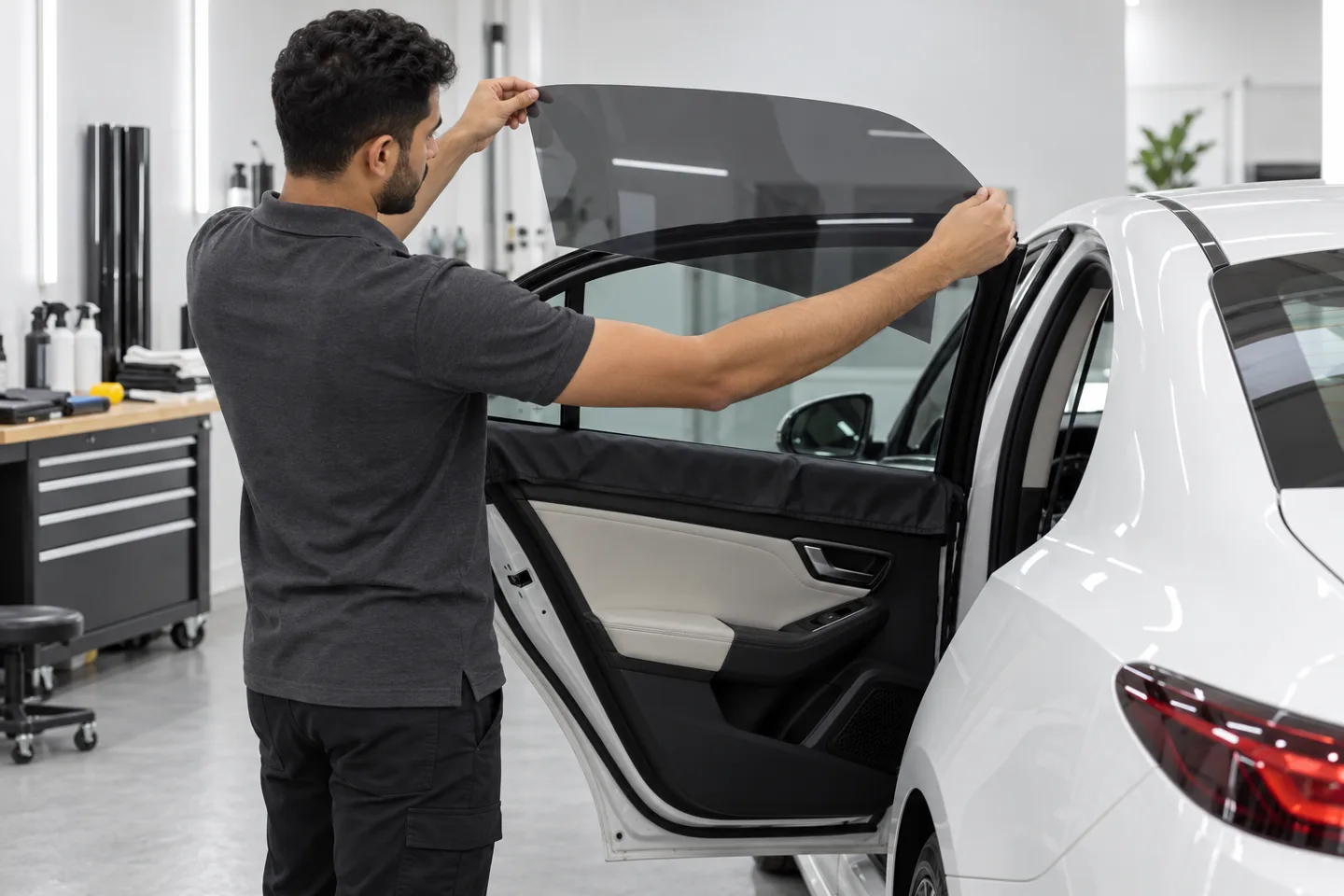
A pre-cut piece follows a prepared outline for a particular window. Confirming that outline against your vehicle helps avoid ordering or fitting a piece intended for a different body style, production change or glass specification.
Send the car details before arranging your visit. If you do not know the model year, say so rather than guessing. Registration year and model year are not always the same, particularly on imported or previously registered vehicles.
Make, model, model year and body style. Include whether it is a saloon, coupe, hatchback, SUV or van, and mention an imported specification or a recent facelift if known.
List front sides, rear sides, fixed quarter panes and rear screen. Ask separately about windscreen or roof glass. A full-car description can mean different coverage in different quotations.
Send photos of replacement glass, existing tint, unusual seals or frameless doors. A pattern listing helps identify a possible match, but the physical glass still needs checking.
Price the complete fitting
Use our advertised film packages as a reference, then request the total for your vehicle. These are film-package figures, not a promise that every car, pattern or extra pane is included at one fixed price.
Know how the film is prepared
Pre-cut describes a piece prepared before application. Computer-cut describes how an outline is sent to a cutting plotter. Ask which route applies to your quotation, especially if avoiding cutting on the vehicle is a priority.
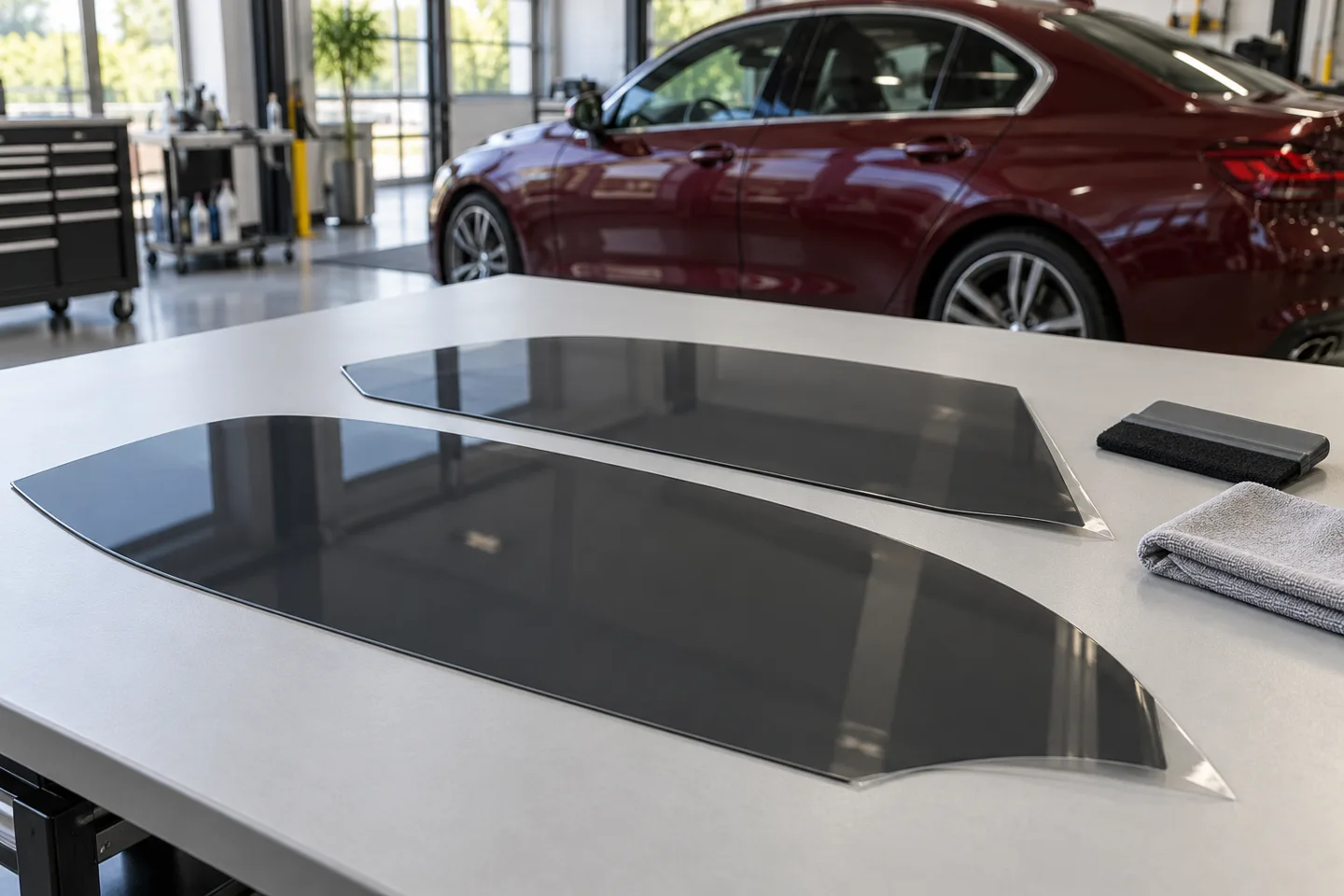
In a computer-cut workflow, the installer selects a vehicle-window outline, checks the coverage and sends it to a compatible plotter. The machine cuts the film away from the car. Pattern selection and cutting setup remain important parts of the job.
A pre-cut kit may arrive already shaped. Confirm its vehicle application, film identity and included panes. Pre-cut does not necessarily mean the workshop owns a particular cutting machine or that the pieces were cut at the time of your visit.
Some work may need a pattern change or carefully planned manual sizing. Ask what is proposed before fitting, where any trimming takes place and how the glass and trim are protected. Do not treat a pre-cut label as a blanket no-blade guarantee.
A pattern match needs a glass check
Repeatable outlines are useful. They do not remove the need to inspect the actual window, its seals and the finish you expect.
A coupe and saloon can share a model name but use different windows. Production changes, fixed quarter panes and regional versions may also affect the match. Send the body style and photos rather than relying only on the badge.
Tell us if a window has been replaced or if seals, trim or window operation have changed. The installer should assess the available outline against the fitted pane and discuss any adjustment before applying the film.
If the available outline does not suit the glass, discuss an alternative fitting approach or a later appointment. A near match should not be forced simply to keep a pre-cut description on the job.
Cutting choice and product choice
A precise outline does not make one film cooler, darker or more protective than another. Choose the product and shade for your glass first, then confirm how it will be prepared and fitted.
Describe the problem in your own words. Afternoon glare, a very warm side window, faded-looking old tint or a replacement pane that does not match are useful starting points. You do not need to know the film code to ask for advice.
Compare total solar energy rejection, or TSER, for the exact series and shade on comparable glass. An infrared rejection number is not the percentage of all cabin heat removed. The car still needs ventilation and air conditioning.
Visible light transmission, or VLT, describes how much visible light passes through. Consider the existing glass, night driving and reversing. Choosing a darker sample for its daytime appearance can change how the windows work after dark.
Check the manufacturer’s UV specification separately from shade and heat performance. Discuss colour and reflection on your actual glass. Neither the cutting process nor a phone photograph guarantees an exact visual match or permanent protection from fading.
From first message to fitting
Send the vehicle details, window list and any old-film photos. Ask the team to check pre-cut suitability and film availability before choosing an appointment. Keep the agreed quotation so the installation can be checked against the same scope.
Discuss existing scratches, chips, seal condition and window movement. Old film and adhesive need attention where removal is included. Clean working surfaces and protected interior trim support careful application, regardless of how the outline was cut.
The prepared piece needs checking for the intended pane and orientation. Curved glass can still require shaping. Application solution helps positioning, and controlled squeegee work removes solution from beneath the film. A cut piece is not a completed installation.
Review visible edges and the general finish with the installer. Confirm what may change during drying and which concerns need a follow-up inspection. Collect the product details, invoice and care instructions before driving away.
Our homepage advises around three to four hours for a typical car, with additional time for involved work. Pattern preparation may simplify part of the process, but old-film removal, glass shape and the final checks affect the actual appointment. Confirm your expected collection time.
Look beyond the cutting label
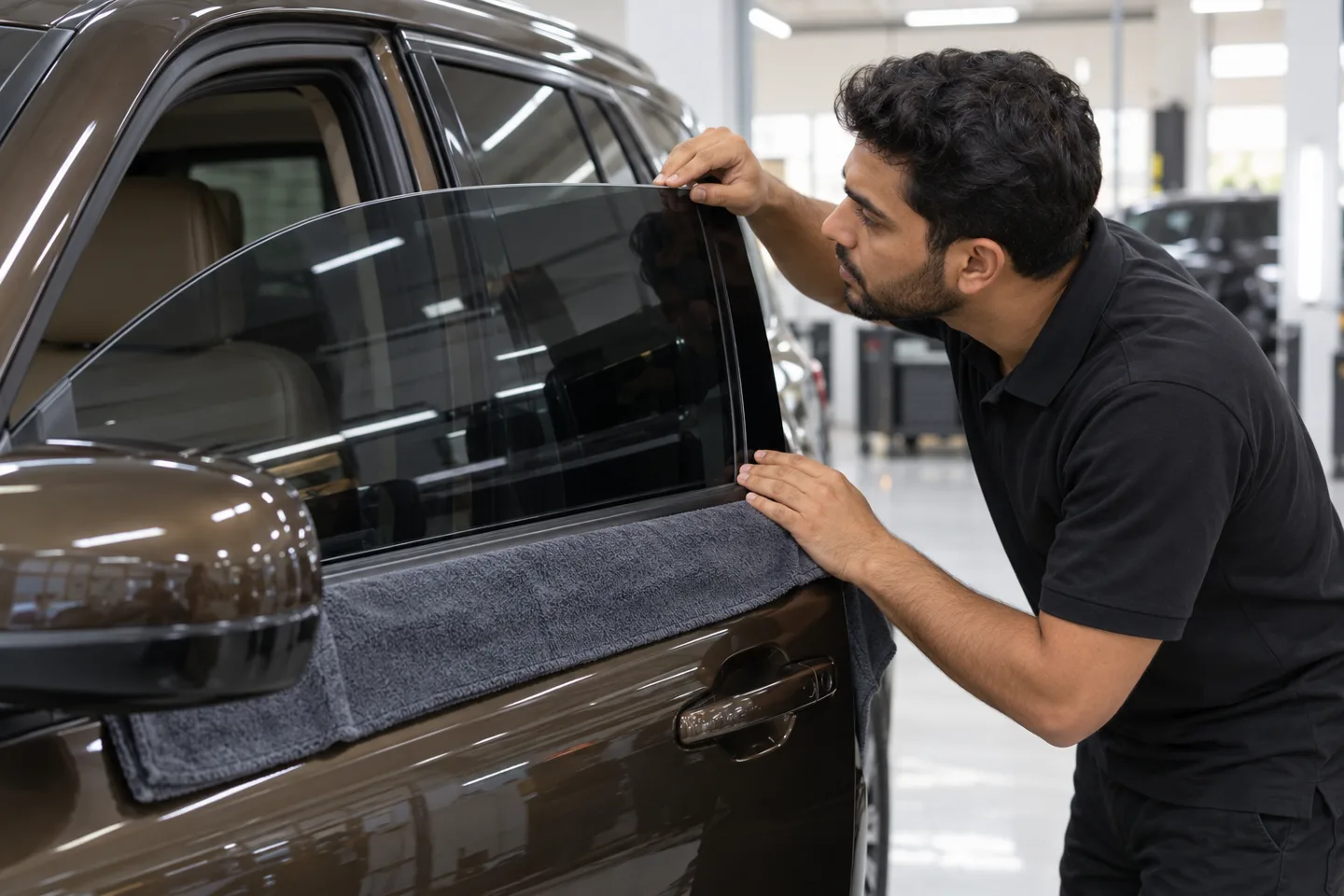
A small, consistent top-edge allowance can be intentional. Discuss the expected finish for your glass and film. An uneven exposed strip or loose edge needs attention, but a universal zero-gap promise is not a useful substitute for an agreed standard.
Ask about visible contamination, creases or trapped material while the installer is present. Some moisture or haze can change as wet-applied film dries. The supplied product’s guidance helps distinguish expected drying from a concern that should be inspected.
Check that the agreed panes were treated and that relevant seals, trim and glass features were considered. Roof glass, cameras and rear demister lines need their own assessment. Extra panels should be authorised before they are added to the job.
Confirm when the windows can move and when the film can be cleaned. Frameless doors may lower the glass automatically, so ask for vehicle-specific guidance. A careful handover should not require you to test fresh film against its instructions.
Full installation or one affected pane
Choose the work around your car’s condition. You may need a complete installation, replacement of old film or help matching one pane.
List all the panes you want covered and mention factory-darkened rear glass. Factory colour is part of the glass, not an applied sheet that can be removed. Confirm the final appearance and selected shade before fitting begins.
Show peeling, bubbles, scratches or discolouration in your enquiry. Removal and adhesive cleaning can add labour and affect the appointment length. Avoid pulling at old film on a rear screen before the demister and antenna area is assessed.
Bring the original invoice or film details if you have them. Matching a shade number alone may not reproduce the colour and reflection of older film. Discuss the acceptable match and available product before treating a single replacement pane.
Confidence after fitting
A few simple care steps protect the finish. Keep your film details and know who to contact if something needs a closer look.
Confirm when your windows can move and when cleaning is safe. Mention frameless doors that lower their glass automatically so the installer can advise for your car.
Follow the instructions for your fitted product. 3M’s automotive care guide specifies at least 48 hours without operating or cleaning the windows. This is not a universal final-curing deadline.
Use a clean soft cloth and the recommended non-abrasive cleaner. Avoid scraping the film, picking at an edge or puncturing a bubble. Ask before trying to remove an unfamiliar mark.
Leave the film undisturbed. Send the fitting date, affected window and clear photos. The team may need to inspect the glass before advising on the cause or applicable cover.
Before you book
Send the make, model, model year, body style and the windows required. The team can discuss availability before booking. A listing is not the final fit check, particularly with replacement glass or unusual variants. Ask what alternative is proposed if the available outline does not match.
Not necessarily. Pre-cut describes when the piece was prepared. It could be produced from a digital pattern or supplied as a prepared kit. Ask which approach applies to your quoted job. We do not name a workshop software platform or plotter here because that equipment has not been documented for this page.
Do not assume that from the label alone. Computer plotting can prepare the main outline away from the vehicle, but an adjustment may still be proposed. Tell the team if this is a particular concern and confirm where any trimming occurs and how the glass and trim will be protected.
It can. A flat outline describes the perimeter, while curved automotive glass may need the film shaped to follow its surface. This is separate from the later drying of application solution. Ask about the work required for your rear screen or other curved panes rather than assuming a cut piece is ready to stick on.
This page is for installation enquiries. If you want supply-only film or have your own kit, check whether the team can accommodate that request before purchasing. Confirm film identity, compatibility and responsibility for unsuitable material. Preparation and positioning remain necessary even when the pieces arrive already cut.
There is no universal saving. The film, window coverage, removal work and actual fitting requirements determine the quote and appointment length. An available pattern can simplify preparation, but it does not remove cleaning, shaping, application or inspection. Compare the total scope rather than paying for a cutting label.
No. Road-use suitability depends on the selected film, existing glazing, window position and applicable requirements. Do not assume a dark film is approved because it is computer-cut or sold for your model. Ask about suitability before authorising installation, particularly for front or roof glass.
Leave the film undisturbed and contact the team with the installation date, affected window and clear photos. Do not trim, peel or heat the edge yourself. A physical inspection may be needed to identify the cause and assess any applicable warranty. Keep the invoice and film details available.
Get the right fit agreed
Start with the make, model, year and windows you want tinted. We can discuss pattern availability, film options and a fitting appointment in Al Quoz 4, Dubai.
For the complete film package and fitting enquiry, use our Dubai car tinting service. Mention your pre-cut preference so the team can confirm availability and the proposed method. Your appointment is confirmed separately.
The workshop scenes demonstrate pattern checking and fitting considerations. They are not records of a named customer job or proof of a particular cutting system.