
Front glass enquiries · Al Quoz 4
Windshield Tinting in Dubai
Feeling heat through your front glass? Start with the right advice before choosing a film. Our car tinting experts help you discuss your windscreen, visibility and the work your vehicle may need.
Front glass is assessed separately. A clear appearance or a 70% VLT label does not establish permission to fit film.
Al Quoz 4, DubaiSpeak to our tinting team
Your actual glassVehicle and equipment considered
Clear quotationAgree coverage before any work
Start with permission
Is windshield tinting allowed in Dubai?
Abu Dhabi Police’s explanation published on 2 July 2017 excludes front glass from the stated side-and-rear tint allowance. Confirm current requirements for the exact vehicle and proposed work before fitting.
Open the UAE legislation sourceFull windscreen coverage
Abu Dhabi Police’s explanation of Article 9, published on 2 July 2017, identifies side and rear glass and excludes front glass. Do not choose full front coverage by applying the side-window allowance to it.
Clear film and upper strips
Neither a nearly clear film nor a narrow upper band is automatically approved. Confirm the exact application with the relevant Dubai authority before arranging fitting. We do not advertise a universal permitted strip depth.
Any vehicle-specific permission
If you hold written authority approval, check that it covers this vehicle, this glass and the proposed application. An installer invoice, product brochure or warranty card does not replace authority permission.
Know the price scope
How much does windshield film cost?
There is no single fitted front-glass price that applies to every car. We first need to establish what work is suitable and permitted, identify the exact product and assess any existing film.
Our advertised car tint packages do not establish that front windscreen coverage is included. Ask for a separate line item rather than assuming a whole-car offer covers it.
What your quotation should identify
- The glass and coverage
- Front windscreen, any proposed upper band or existing-film removal listed individually.
- The film supplied
- Manufacturer, series and exact product code, with availability confirmed for the job.
- Preparation and removal
- Existing adhesive, access, trim protection and any work priced separately.
- The total payable
- Fitting charges, any extras and the total including VAT before you agree.
- Warranty and appointment
- Applicable cover, provider, exclusions and the time allowed for the actual work.
Understand the finished glass
Light transmission comes first
VLT means visible light transmission. A higher percentage lets more visible light through. It is a measurement, not a certificate of road-use approval.
Your windscreen already changes light
Existing glass may have colour, a solar-control layer or factory features. Adding a film changes the finished combination. A product name containing “70” does not mean the fitted windscreen will transmit 70% of light.
Check whether a technical sheet reports film-only performance or performance on specified test glass. Do not multiply a film-on-glass figure by your glass reading again. Actual vehicle measurements and the applicable permission still need separate consideration.
Example only
A simplified calculation using hypothetical film-only data. It is not a vehicle test or a legal threshold.
Visible light
How much visible light passes through. Important when assessing the view through the glass.
Solar energy
Total solar energy rejected by the tested filmed glass. It is not a cabin-temperature reduction.
Part of the spectrum
Check the wavelength range and test method. An infrared percentage is not an equivalent TSER figure.
See 3M’s film terminology and test-glass explanation when comparing product sheets.
Think beyond bright sunlight
Keep night visibility part of the decision
A finish that looks comfortable in a bright workshop can feel very different on an unlit road. Reducing glare does not mean that a darker windscreen improves every driving condition.
Less light after dark
Film that reduces visible light also reduces the light available to see through the windscreen. Rain, poorly lit roads and dirty or scratched glass add to the difficulty. Do not choose a front-glass product for privacy.
Reflections and optical clarity
Discuss dashboard reflections, haze, distortion and any existing double images. A light-looking sample cannot establish how the finished curved glass will appear from the driving position.
Concerns need attention
If existing film makes the view unclear, do not treat it as something to get used to. Arrange an assessment and suitable removal advice. Film is not a repair for a damaged windscreen.
Compare the exact product
Clear film is still an added film
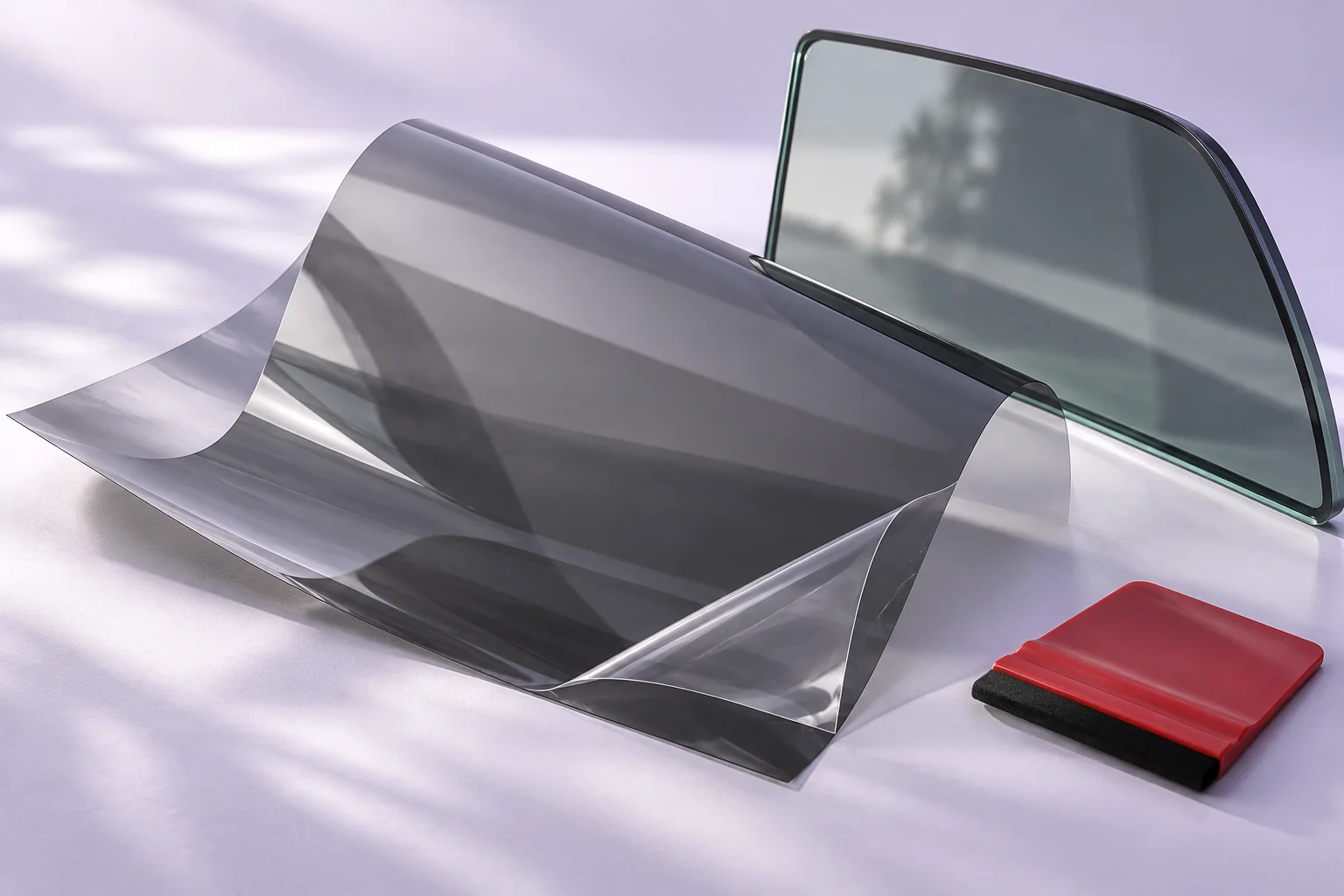
“Clear”, “ceramic” and “UV film” describe different aspects of a product. None of those labels alone establishes permission for front-glass installation.
- Ask for the complete film code. Compare its stated VLT and solar performance on the documented test glass.
- Separate technology from suitability. Ceramic or non-metallic construction does not prove compatibility with every camera, display or sensor.
- Keep factory glass distinct. A solar-control layer built into laminated glass is different from aftermarket film applied to its surface.
- Confirm local supply and cover. A manufacturer’s overseas product page is not confirmation of Dubai stock or local warranty terms.
For product-range information, explore 3M Crystalline films. Front-glass suitability remains a separate decision.
Your vehicle matters
Check what is on your windscreen
Send the make, model and year. Tell us about factory glass features and equipment near the mirror before discussing a material or installation.
Cameras and sensors
Identify the forward camera and rain or light sensors. Any required clear area, cut-out or application restriction must follow the relevant vehicle and product instructions.
Head-up display
Mention a projected speed display and any existing ghosting or reflections. Do not assume every film and glass combination will preserve the same view.
Existing glass condition
Chips, cracks, scratches, coatings and old adhesive affect the assessment. Clarify glass concerns first rather than covering them with new material.
Dashboard and fittings
Interior access and moisture protection matter around electronics and trim. Removing camera hardware is not a routine part of a film enquiry and must not be assumed.
Non-metallic film can address some signal concerns. It does not establish camera compatibility, remove the need for vehicle-specific instructions or replace any required calibration after separate glass or equipment work.
A clear order for your enquiry
From first call to an agreed plan
Discuss permission and the vehicle before booking application. Where fitting is not appropriate, ask about existing-film removal or suitable side and rear window options instead.
- 01
Tell us the concern
Heat through the front glass, an existing tint problem or a product you have seen. Share vehicle details and photos without obscuring your view while taking them.
- 02
Establish the limits
Confirm the intended coverage and authority requirements. Identify any written permission and relevant glass or equipment restrictions.
- 03
Agree the actual work
If the proposal is suitable and permitted, confirm film, preparation, price and appointment. Otherwise agree a different service or leave the front glass untreated.
- 04
Keep the paperwork
For any agreed work, retain the invoice, applicable product details and care guidance. A quotation or enquiry is not a confirmed booking or authority approval.
Already have windscreen film?
Discuss removal before adding another layer
Old tint, adhesive residue or lifting edges need their own assessment. Applying another layer over a problem changes the light transmission again and does not resolve the original defect.
Tell us when the film was fitted, whether you have an invoice and what looks wrong from inside the car. Include a photo of the affected area and mention any glass-mounted equipment.
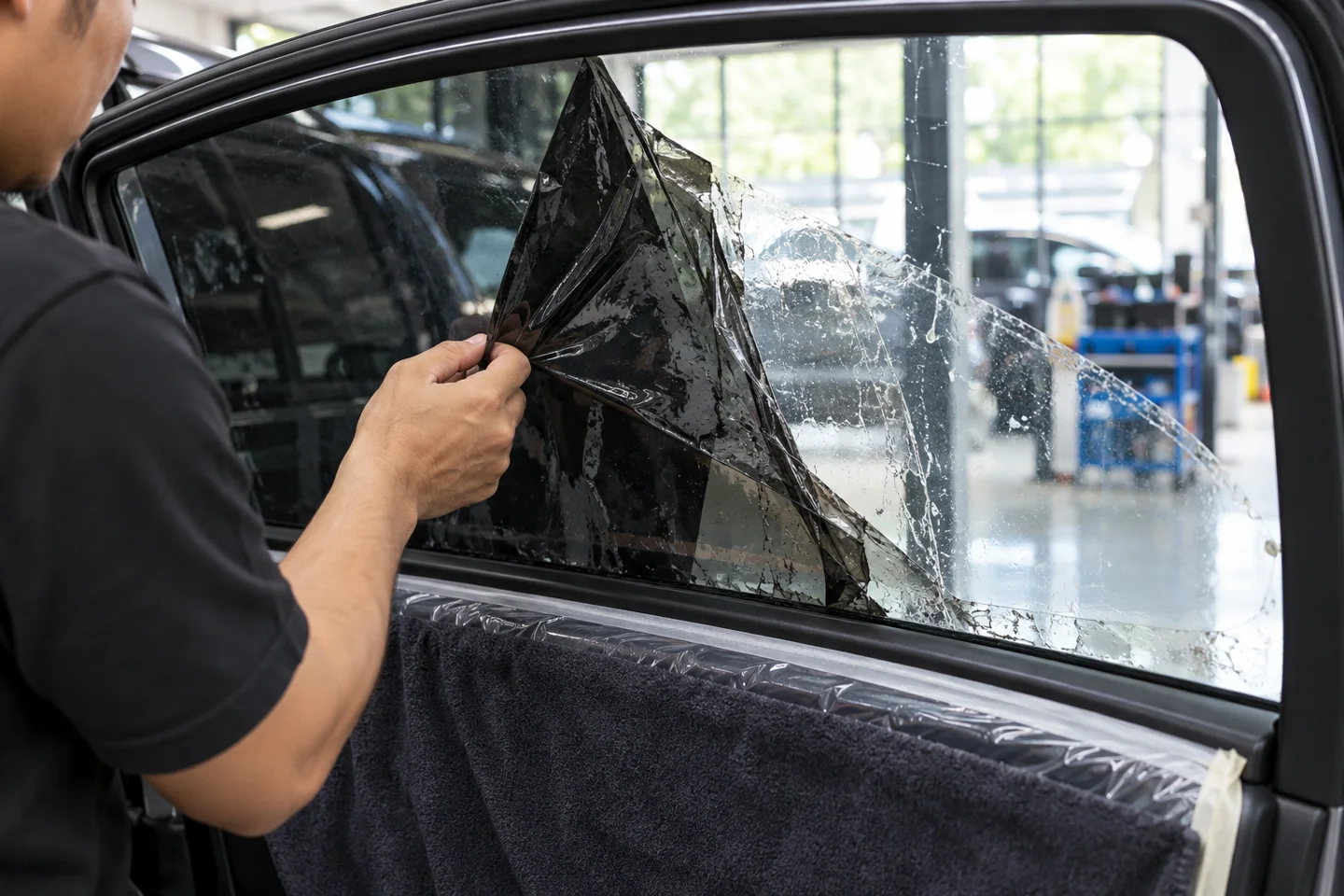
Removal methods depend on the material, glass and access. Do not scrape around sensor areas or use aggressive chemicals on the dashboard. Our window tint removal service explains how to request an assessment.
Details worth keeping
Know the cover and care before work starts
Our featured car packages have their own warranty terms. That does not automatically extend the same cover to a separately assessed windscreen service.
About our tinting teamWritten warranty
Confirm the provider, duration, covered defects and whether removal or replacement labour is included. A material warranty does not guarantee legal approval, glass condition or universal sensor compatibility.
Product-specific aftercare
Follow the instructions supplied for the actual film. Cleaning and curing periods differ. Use the recommended non-abrasive cleaner and soft cloth, and avoid blades or abrasive pads.
A clear support route
Keep your invoice and contact the team about persistent haze, lifting or distortion. Send the installation date and photos. Do not assume impaired visibility is harmless curing moisture.
Answers before you enquire
Windshield tinting questions
Front-glass permission, product specifications and your vehicle all need to be considered together.
Is 70% VLT windshield film legal in Dubai?
A 70% VLT label does not establish permission for front-glass fitting. The official police explanation of Article 9 limits the described allowance to side and rear glass. Confirm any vehicle-specific front-glass permission with the relevant authority before arranging installation.
Can I fit clear UV or ceramic film to the front windscreen?
Do not assume a clear appearance creates an exception. Confirm the proposed application with the relevant authority and check the product against your glass and vehicle equipment. A ceramic or UV label is not legal approval.
Is a 15 cm sun strip automatically permitted?
We do not advertise a universal permitted strip depth. Confirm the exact coverage and any applicable conditions with the relevant Dubai authority. A factory shade band is not proof that an additional aftermarket strip is permitted.
Is front glass included in your car tint package?
Do not assume it is included. Our advertised package information calls for separate front-glass assessment. Your quotation should identify each window covered, any suitable and permitted front-glass work, preparation and the total including VAT.
Will windshield tint improve night driving?
No general improvement can be promised. Reducing visible light can make the view more difficult after dark. Consider glare, reflections, optical clarity, rain and road lighting rather than choosing front-glass film for darkness or privacy.
How long does a windscreen appointment take?
Confirm the time for the agreed work after assessment. Existing-film removal, adhesive, glass access and equipment affect the appointment. Fitting time and the film’s curing period are different and should be explained separately.
Can film affect cameras or a head-up display?
Compatibility depends on the vehicle, glass, equipment and film. Tell us about cameras, rain sensors and a head-up display. Follow the applicable vehicle and film instructions rather than treating non-metallic construction as proof of universal compatibility.
Can you assess film already on my windscreen?
Contact our team with your car details, photos and the concern you have noticed. Existing film and removal can be discussed separately from replacement. Where visibility is affected, arrange advice before treating it as normal curing.
Speak to Car Tinting Heroes
Get the right answer for your front glass
Call our Al Quoz 4 team with your make, model, year and main concern. We can discuss the next step before you spend money on the wrong coverage.