Blue or bronze
Ask for the manufacturer, series and colour code. Compare a sample against your own glass.
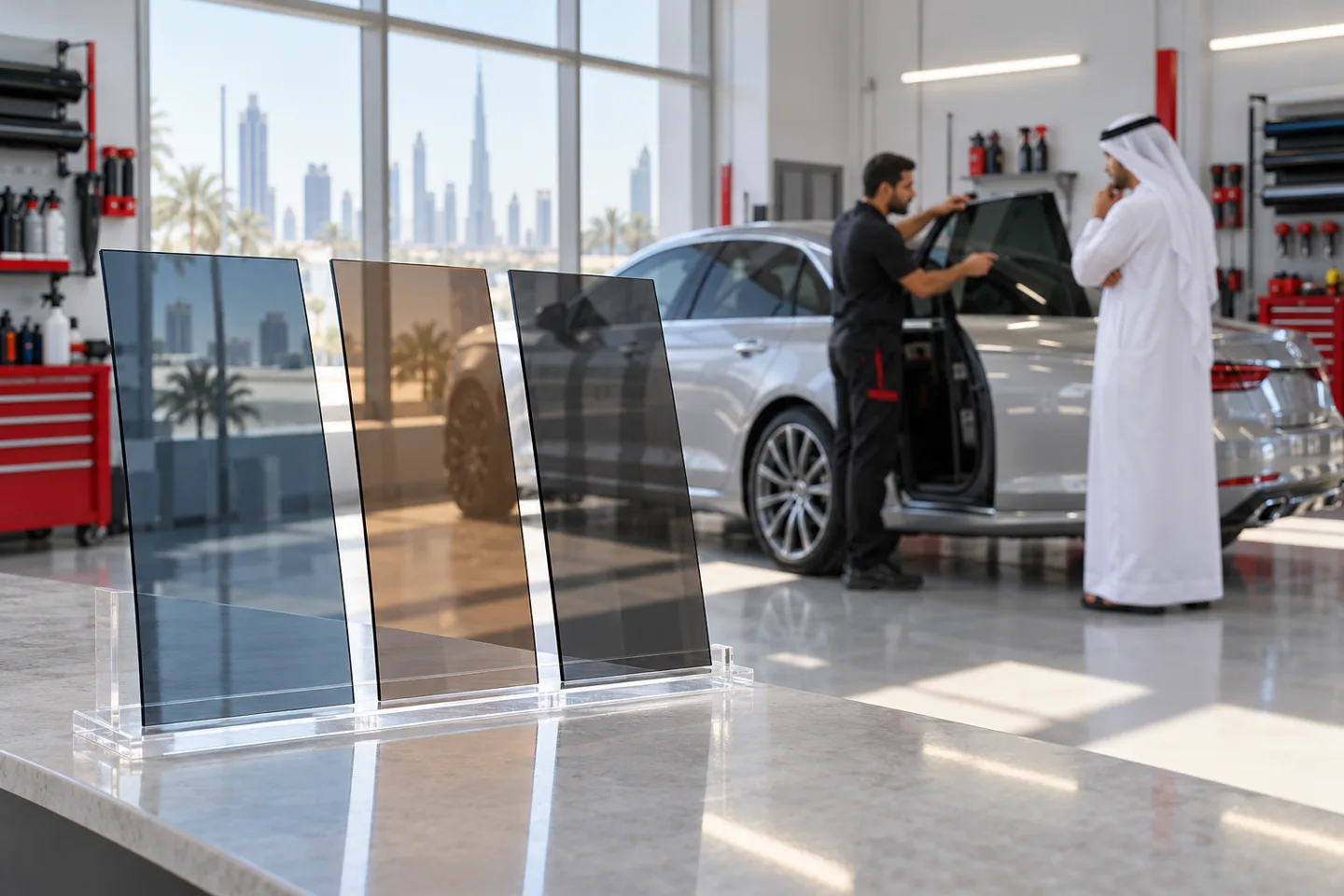
Colour choices in Al Quoz 4
Find the look you want. Check the film that makes it possible.
Compare coloured-film finishes, identifiable products and suitable applications before requesting a quote. Start here for blue, bronze or another colour idea. Car Tinting Heroes will check the proposed product and supply before fitting is agreed.
Coloured-film jobs are quoted individually. No colour or VLT is promised in stock until confirmed.
Start with your project
A clear brief helps us check the right material and give you a useful answer before you travel.
Tell us the colour you like, your make, model and year, and which windows you want treated. A reference picture helps explain the style, but the exact film and permitted application still need checking. Ask about a physical sample before arranging installation.
Send the glass location, approximate dimensions and the effect you want. Transparent colour, translucent graphics and opaque coverage do different jobs. Building glass needs its own compatible product and quotation, with installation side and access agreed before work begins.
If one window needs replacing, send the original film code or invoice and photos of the neighbouring glass. We can discuss whether matching or replacing a wider area makes more sense. A similar colour name does not guarantee the same fitted appearance.
It is a description of appearance rather than one technical film type. An automotive solar film, a decorative glass film and a coloured graphics vinyl may all look coloured, but their intended uses, transparency and performance can be very different.
Bring us your colour idea
Start with the look you want. We’ll discuss the exact film, sample and supply before you book.
Manufacturer examples below are product references. Current stock and suitability need confirmation.
Documented product examples
Use this small reference list to understand the difference between a colour description and an identifiable product. Local supply and application remain subject to confirmation.
| Named product | Published VLT | Published TSER | Application category |
|---|---|---|---|
| SunTek HP 50 Blue | 54% | 39% | Automotive metal-dyed film |
| SunTek HP 40 Bronze | 42% | 41% | Automotive metal-dyed film |
| SunTek HP 18 Bronze | 15% | 49% | Automotive metal-dyed film |
| 3M Scotchcal 3630 | Varies by colour | Not compared here | Translucent graphics and decorative glass |
SunTek figures come from its April 2024 automotive specification sheet, using nominal 6 mm clear glass and NFRC guidelines. Actual glass affects results. These values are not legal recommendations. SunTek describes the HP range as a metal-dyed construction with charcoal, bronze and blue options.
3M’s Scotchcal 3630 product information describes a translucent vinyl for graphics, signs and decorative glass with a permanent adhesive. That is not evidence that it is suitable as a driving-visibility window tint. Identify the application before comparing colour charts or requesting a roll.

Make the colour choice tangible
A colour that works with your paintwork should also feel comfortable from inside the car. Ask to view the proposed material in daylight and shade, rather than choosing from one flattering exterior photograph.
Look at the sample against your own paint, trim and interior. Existing glass can influence the finished tone, so a picture of a different vehicle is only a starting point for the discussion.
Assess the view through the sample as well as its reflected colour. Tell us if your regular driving includes dark roads or basement parking, and make that requirement part of the initial selection.
Record the code of the sample you approve. If the supplied product changes, ask to review the new one. “The same blue” or “a similar bronze” is not a complete fitting instruction.
Choose the effect
01
Choose this direction when seeing through the glass remains part of the brief. Ask how the film changes transmitted colour and light level, and whether it is designed for your intended use. Transparent does not mean invisible or unrestricted for vehicle application.
02
A reflective finish changes how the glass looks from outside and may also affect the interior view under different lighting. Ask for the product’s reflectance information and a physical sample. Do not treat a mirror-like appearance as proof of better privacy in every condition.
03
These finishes belong in a different conversation when the aim is decoration, graphics or blocking a view. Opaque coverage prevents a through-view. It must not be offered as a substitute for a transparent automotive product on glass the driver needs to see through.
Describe the result you need before asking for a material. “A subtle warm tone with a clear view” gives a more useful starting point than “the darkest bronze”. For a shop partition, “hide the stockroom but keep the entrance bright” calls for a different assessment.
Choose with the view in mind
A colour sample shows appearance. It does not establish approval for your vehicle and window position.
Tell us if you regularly drive on dark roads or use basement parking. Include the view from inside when comparing samples.
Get a complete figure
Coloured-film work is quoted individually after the actual product, availability and windows are confirmed. We do not publish a universal fitted price for an unidentified coloured film.
Your written quotation
A useful price tells you exactly what is being supplied and fitted. Ask for the total in AED, VAT treatment and any old-film removal before agreeing to the appointment.
An enquiry checks the options. It does not reserve a film or fitting slot.
If you are weighing a coloured option against a standard tint package, use the same vehicle, coverage and preparation. Our car tinting price guide explains the advertised general packages. Those offers are not automatically prices for a blue, bronze or other specially requested film.
Spend on the result you want
Decide which glass you want assessed and why. A price for two side windows is different from a whole-vehicle job. If the budget is fixed, ask what can be offered within it without quietly changing the product or omitting preparation.
Old film may need removing before a new finish can be assessed properly. Send photos and mention lifting edges, bubbles or previous adhesive work. Ask for the removal line to be clear so you can compare the complete cost of changing the look.
If the proposed material needs sourcing, confirm the product code, expected timing and any order conditions before paying. Ask what happens if the sample is unsuitable. Do not assume every requested colour can be obtained in a suitable automotive specification.
The best-value quote is the one that makes the intended result and responsibilities clear. A low headline price is difficult to judge if the film, covered windows or aftercare support are missing. Send competing written specifications if you want help understanding the differences, rather than comparing two colour names alone.
A better match starts here
Send a side view, a view from inside and a close-up of any existing film. Add the details below so we can discuss the right preparation.
Rear glass may already differ from the front. The same film will not necessarily give every window the same appearance.
Send a side-on photo of the whole car.Identify the changed pane and share the original film code if available. Compare a sample beside the neighbouring glass.
Tell us which window needs matching.Mention bubbles, lifting edges and previous adhesive work. Existing film needs assessment before removal or any layering is proposed.
Include close-ups and the fitting date.Point out rear demister lines, glass antennas and nearby sensors. Film choice and removal must account for these features.
Share the model, year and relevant features.Unsure what is on your glass? Start with photos and any invoice you have.
From idea to agreed fitting
Send the vehicle or glass details, the windows involved and a reference for your preferred look. Include old film, location and timing so the initial reply can address availability and preparation together.
Discuss the product identity, sample, application limits and any necessary suitability checks. If an alternative is proposed, compare it before confirming the job. Keep the selected code with the quotation.
Confirm coverage, removal, fitting, VAT and written warranty conditions. Ask when the vehicle is expected to be ready and which aftercare restrictions could affect your plans for the following days.
At handover, ask the team to explain the finish, expected drying appearance and when to report a concern. Keep the invoice and product information so future enquiries refer to the film actually supplied.
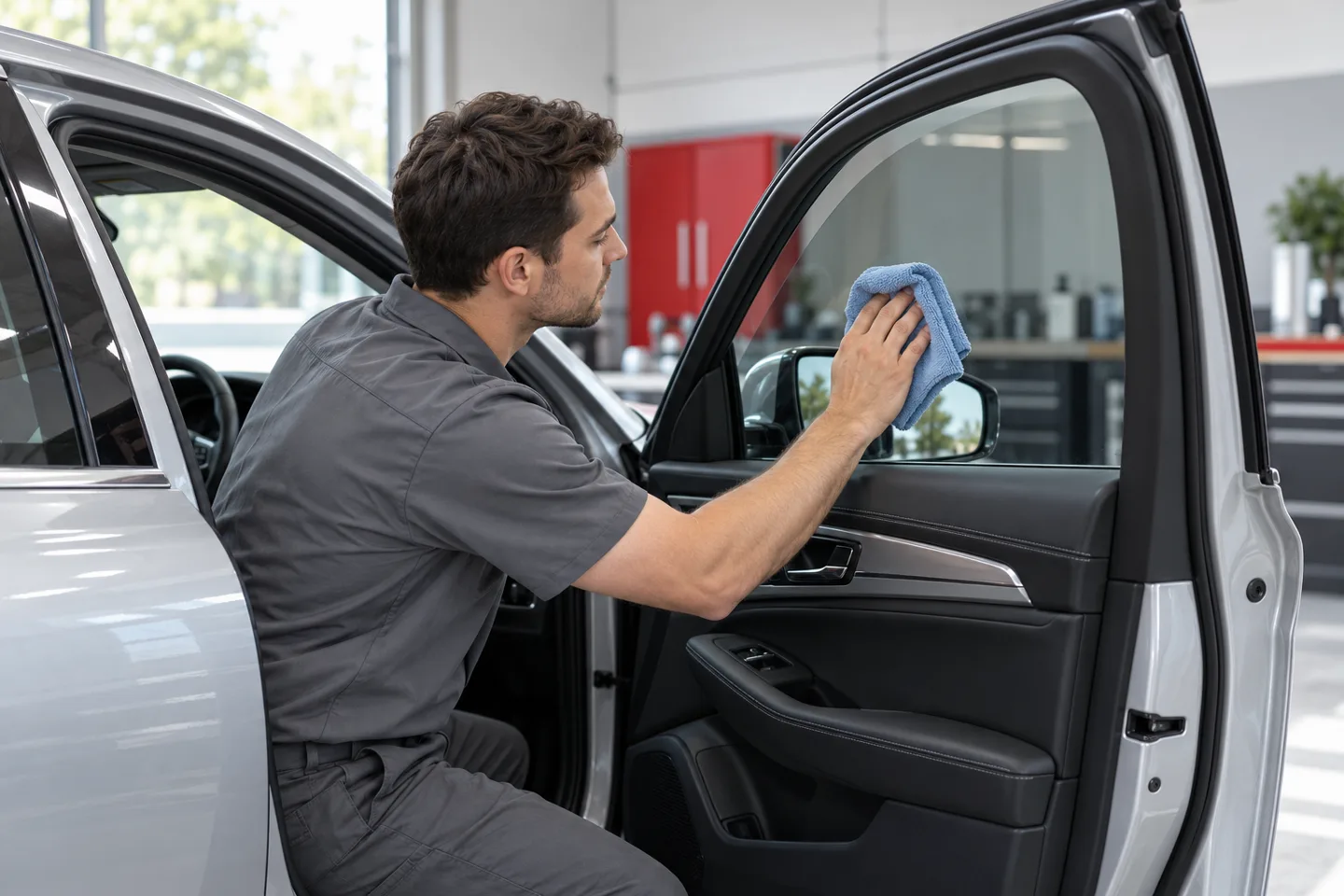
Tell us if you need to use ticket machines, security gates or regularly lower the windows after collection. Ask for the supplied product’s operation restrictions before selecting an appointment. An estimated fitting time and the film’s drying period are different things.
Leave with clear answers
Photograph it and contact the installer before peeling, scraping or applying stronger cleaners. Include when it started and any recent work.
Choose the next conversation
Blue in more detail
See the specific sample, interior-view and matching questions that matter when blue is the finish you are considering.
Comfort is the priority
If solar performance matters more than colour, discuss a named automotive film at a suitable light transmission and compare its installed quote.
Glass graphics
For coloured logos, lettering or shop and office glass, start with the design, dimensions and compatible graphics material.
Share whether the surface is an internal partition or an external window, and provide the glass type if known. Ask about substrate compatibility, installation side, access and any building-management requirements. Confirm whether the estimate is per square metre or a complete job total, including preparation and any design work.
Automotive film and architectural graphics should not be treated as interchangeable because both adhere to glass. A suitable building proposal also needs to address how much view or daylight you want to retain. Use a physical sample on the intended surface before approving a prominent colour treatment.
Before you choose
Ask about the product and the application together. A colour name is a useful starting point, but the sample, specification and written quotation are what make the decision clear.
For your own project, send the details once and keep the reply with your quote. That gives the fitting team a clear record of the finish you have discussed.
Ask us to confirm the manufacturer, series, colour code, suitable application and current supply before booking. The named products on this page are verified manufacturer references, not a live inventory. We will discuss alternatives if your requested finish cannot be confirmed.
This page does not establish blanket approval for a colour. Confirm the exact product, reflectivity, vehicle category and window positions with the relevant authority or authorised inspection service before fitting. Do not assume that a published VLT value approves the installation.
Colour alone does not establish solar performance. Ask for the exact product’s technical sheet and compare the relevant measurements on the same glass basis. Decorative vinyl and automotive solar film should not be given the same performance claims.
Send a reference and explain the intended use. We do not promise those finishes as stocked or suitable for road vehicles. A display project, decorative partition and driving-visibility window need different product and suitability checks.
Send any original film code, invoice and clear photographs. A matching colour name may still look different because of the glass, material age or product variation. Review the proposed sample beside the existing windows before approving a replacement.
Your quote should state the vehicle and every included window, together with removal, fitting and VAT treatment. Building-glass work may use an area-based price or a complete project total. Confirm the unit and exclusions before comparing prices.
Share your Dubai location and the workspace available. The team can assess whether mobile fitting is suitable for the proposed job. Product availability, working conditions and the appointment need confirmation before a visit is arranged.
Send the car make, model and year or the building-glass details, the surfaces involved, existing-film photos and a reference for the desired colour. Add your location, budget and preferred timing. A product code is particularly helpful if you already have one.
Start with the look you want
Send your car details or glass photos and the colour you have in mind. We can discuss the options, check what is available and prepare a quote for an agreed product and application.
Al Quoz 4, Dubai. Call for directions and to confirm an appointment before travelling.