Car tinting experts in Al Quoz 4
Tesla Window Tinting in Dubai
Reduce distracting glare and choose a more comfortable glass finish for your Model 3 or Model Y. We match the film, shade and covered windows to your car, with frameless-door care and a separate assessment for roof glass.
AED 500–3,000Tesla fitting estimates by film choice. Roof, front glass and removal assessed separately.
Choose the film and the fitting
Tesla tinting price ranges
Compare these estimates for new tint fitting, then ask for the same window list across your preferred films. The car’s year, glass area, access and selected series change the final amount.
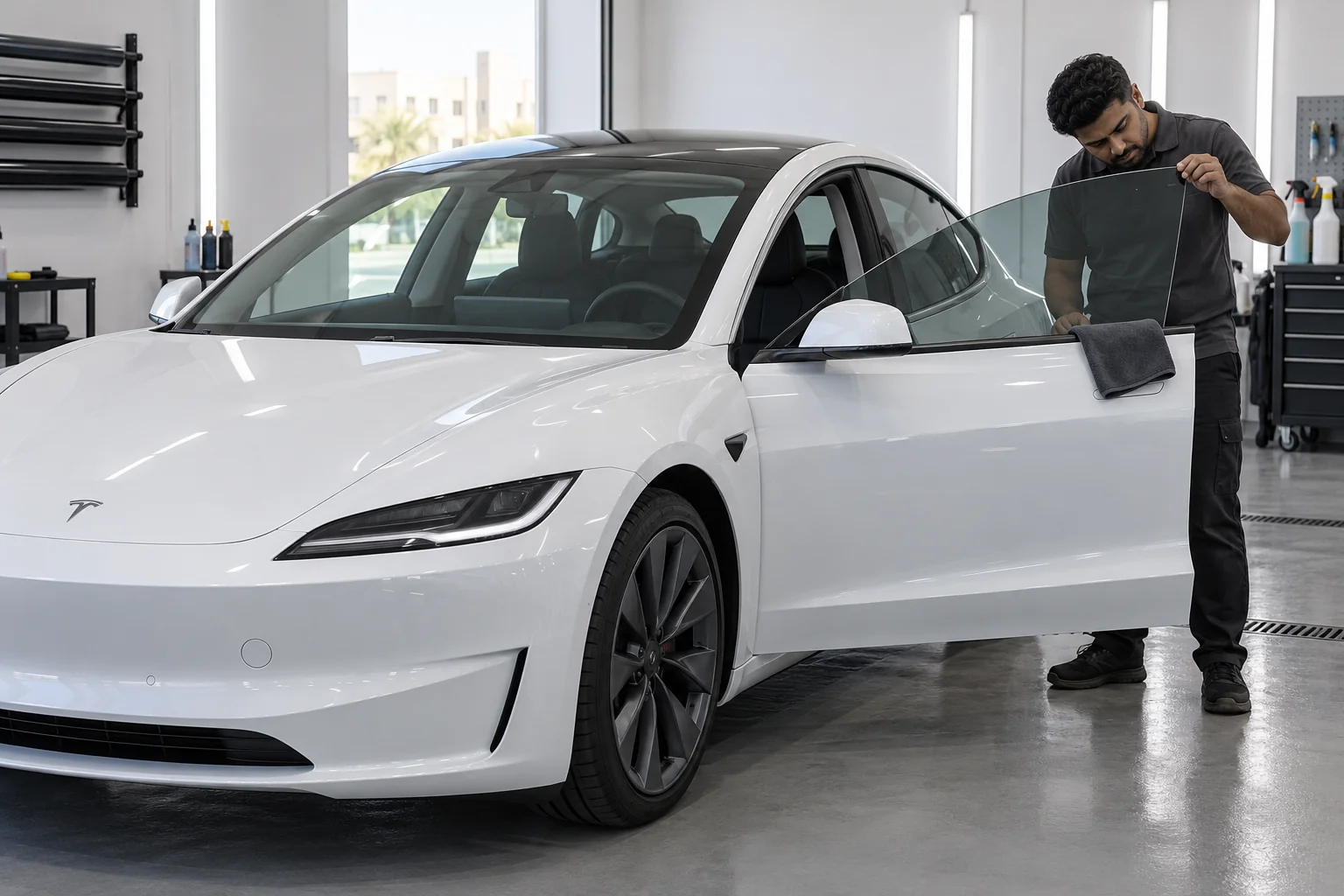
Professional fitting and the agreed film are priced together. The written quotation identifies the covered door windows, fixed side panes and rear glass. Roof and windscreen work are separate decisions.
See package prices and inclusionsA budget appearance and glare-control option. Compare its named product specifications before choosing on price alone.
Product-specific appearance and solar-control choices. The exact series and shade belong in the quotation.
Compare documented solar performance at your preferred shade. A premium label is not a roof-glass compatibility approval.
Removal is typically estimated separately at AED 200–500, depending on the panes, adhesive and condition. A one-window correction needs its own price.
Approve the complete amount including VAT before fitting. Any roof work, front glass, extra preparation or mobile fitting arrangement must be listed rather than assumed.
Send your model, year and required windows for a comparable Tesla quote.
A finish for everyday driving
Choose comfort without guessing by darkness
Manage sunlight at your seat
Choose a film for the glare and solar exposure you notice on your usual journeys. A light film can be worth comparing when you want heat-control performance without the darkest look.
Keep the view comfortable
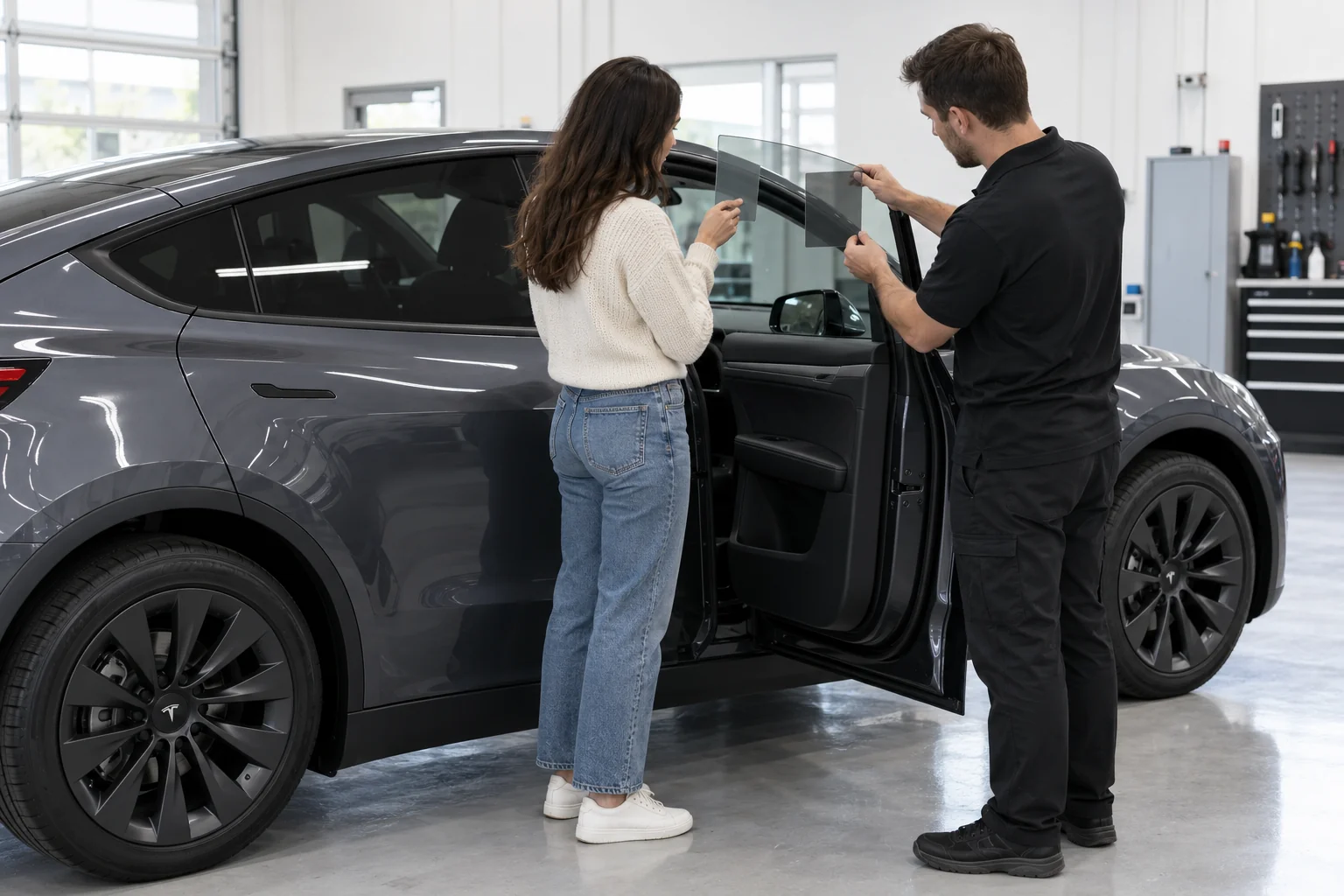
Look through samples from inside the car. The original glass, film and lighting combine to affect the finish. Consider night visibility as well as daytime privacy.
Compare the right measurements
Visible light transmission, or VLT, describes how much visible light passes through. Total solar energy rejection, or TSER, describes broader solar performance. Neither should be replaced by an isolated infrared percentage.
Tesla glass already provides UV protection. Added film should solve a specific comfort or appearance need, not rely on a claim that untreated Tesla glass offers none.
The model year matters
Model 3 and Model Y need different fitting plans
Send the year as well as the model. Glass assemblies, factory shading and replacement panes can differ, so a pattern or package name is only the starting point.
Model 3
The broad curved rear glazing needs an explicit coverage boundary. Ask whether the quote covers the full agreed rear pane or a smaller area, and where a film edge would appear. Roof glass should be identified separately.
The film edge must work with the window’s movement and seals. Existing scratches, replacement glass, old film and window-operation concerns are noted before fitting.
Model Y
Count the actual door and fixed side panes, then identify the rear screen. Factory-darkened glass changes the appearance of an added film, so a front-to-rear visual match needs a sample check.
The panoramic glazing is not an automatic extension of side-window tinting. Its construction, condition and film guidance need a separate review before a product or price is agreed.
Match the generation before matching the film
Tesla separates the 2017–2023 Model 3 and 2020–2024 Model Y manuals from its newer vehicles. Registration year alone may not identify the exact glass fitted to an imported or repaired car.
- Earlier Model 3
- Identify the rear pane and separate roof pane. Agree full or partial rear coverage and inspect existing heater elements before any old-film removal.
- Updated Model 3
- Use the current vehicle specification and glass markings. Do not carry an earlier car’s cutting pattern, glass construction or roof recommendation across without checking.
- Earlier or updated Model Y
- Identify the actual rear doors, fixed side panes, rear screen and roof. Check factory shading on each pane instead of assuming all Model Y windows transmit the same light.
Use the manual available in your vehicle and the Tesla owner’s manual selector. Acoustic glazing, factory colour and replacement history are identification details, not automatic approval for an added roof film.
Compare your actual glass
Ask for readings that identify the window
A useful VLT record names the vehicle, pane, date and meter, then distinguishes the original glass reading from the completed glass-and-film reading. Measure the accessible panes under the meter maker’s instructions.
Product-sheet TSER and infrared figures describe specified laboratory conditions. A light-transmission meter does not measure whole-car cooling or prove a roof safe to tint.
Make your quote easy to compare
- Model, year and any replacement glass.
- Named film series and shade for each treated area.
- Door, quarter and rear-screen coverage boundaries.
- Roof, windscreen and removal as separate lines.
- Product warranty and fitting responsibility in writing.
For Model S, Model X or another Tesla variant, send the year and glass photos. We will discuss the actual panes rather than assume Model 3 or Model Y coverage applies.
A separate decision for panoramic glazing
Check roof-glass compatibility before choosing film
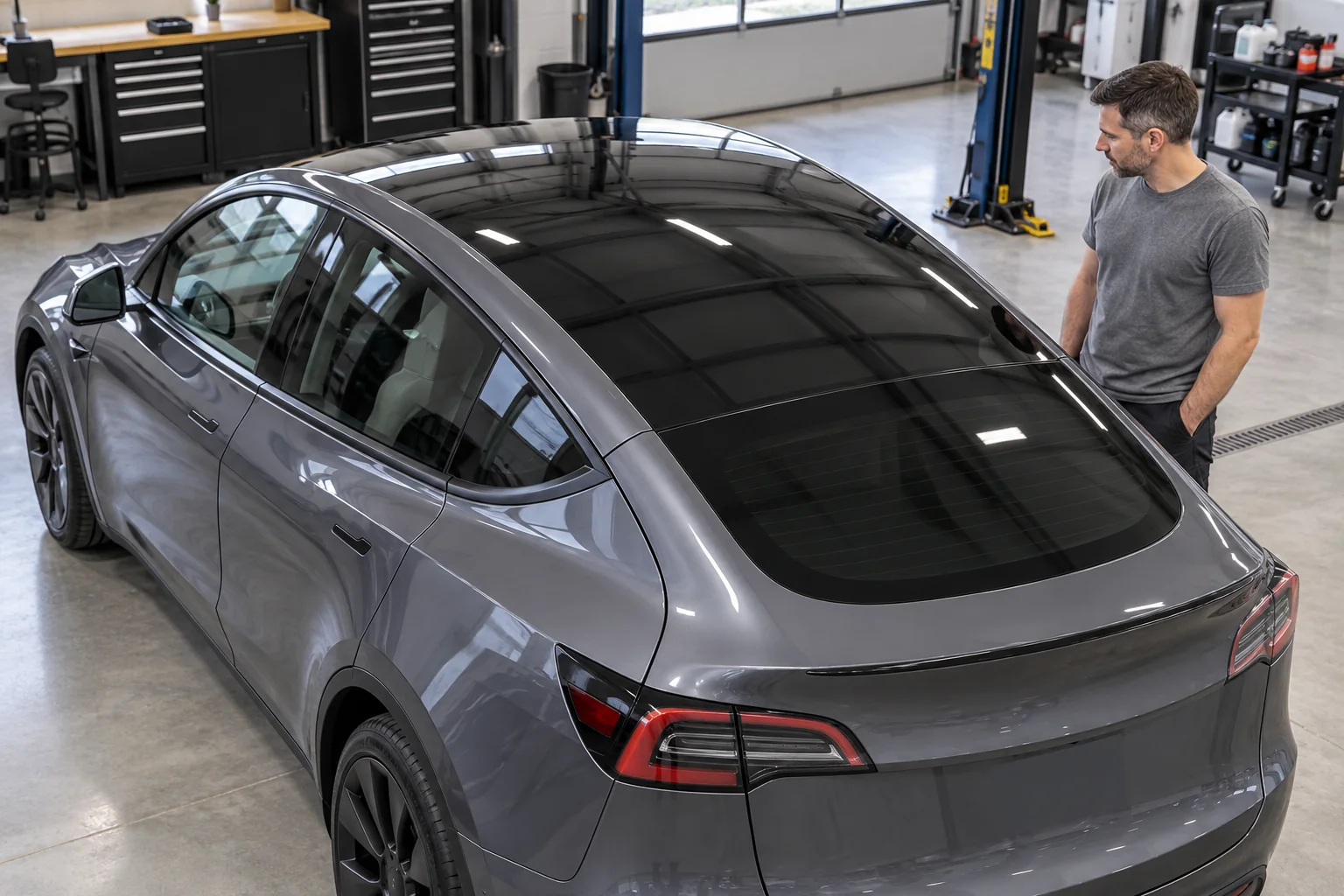
A side-window film recommendation does not approve the same product for a Tesla panoramic roof. Start with the model, year, exact pane and existing condition. Keep the roof outside the standard window package until its suitability and scope are agreed.
Explain the discomfort you want to improve. Overhead sun, visible glare and a desire for more privacy are different concerns. Existing factory treatment may already provide useful protection, so a darker roof is not automatically the most useful change.
- Identify the glassRecord model year, markings, replacement history, existing film and visible chips or cracks. Distinguish fixed roof glass from a rear pane and any opening sunroof.
- Obtain product-specific adviceCheck the exact film against the identified glass and the manufacturer’s application restrictions. Request written compatibility advice where the published guidance does not establish the combination.
- Choose the outcomeLeave the roof unchanged, consider a model-compatible shade, or proceed only with a supported film proposal and an agreed written scope.
Why thermal stress belongs in the assessment
Glass absorbs part of the solar energy reaching it. Uneven temperature across a pane can create thermal stress, and glass condition and edge strength matter. A film’s “heat rejection” percentage is not a glass-temperature limit or a guarantee against breakage.
3M’s thermal-stress bulletin explains the relationship between temperature differences and glass-edge strength. It is general glazing guidance, not approval for a particular Tesla roof. The actual vehicle and film combination still needs its own compatibility review.
Do not assume that every ceramic film is safe for every panoramic pane, or that every added film will cause a crack. Neither conclusion follows from a product category. If compatibility cannot be established, do not proceed on the strength of a sales label or an unrelated installation photo.
Keep the original roof
A sensible outcome when the existing view and comfort suit you, or the proposed film lacks adequate compatibility support. No film purchase is required simply because the side windows are being tinted.
Consider a fitted shade
Check a shade designed for your exact model and year, following the vehicle and accessory instructions. It changes the overhead view and is a separate choice from bonded film. Do not improvise a covering that obstructs equipment or comes loose.
Review a specific film proposal
Request the product code, intended application surface and supporting compatibility advice. Confirm the actual roof pane, full or partial coverage and visible film boundaries before agreeing a quotation.
What the roof quotation must identify
- The exact roof pane, model year and recorded condition.
- Named film and shade, with compatibility advice for that application.
- Removal of any old layer and the agreed preparation.
- Coverage boundaries, installation time and VAT-inclusive total.
- Handover checks, cleaning instructions and the review contact.
Keep the roof line separate from doors, fixed side windows and the rear screen. For front-glass requests, see the windscreen suitability guidance. Our price guide provides package context, not a roof-installation tariff.
Film cover is not glass-breakage cover
Ask who covers product defects, fitting defects, glass breakage, removal labour and any replacement installation. Those are separate questions. A film warranty should not be read as a promise that every roof-related cost is included.
Tesla’s vehicle warranty and the supplied film’s regional terms are separate documents. Do not assume that an accessory programme, warranty or approval advertised in another market applies to a local workshop installation.
No particular roof-film combination is listed here as manufacturer-approved. The decision depends on the identified glass and supporting product advice. Existing damage or unresolved suitability should be assessed before a booking is treated as confirmed roof work.
Share the Tesla model and year, a roof overview, readable glass markings and any known replacement or tint history. Photos help prepare the discussion but cannot verify hidden edge condition or complete product compatibility.
Care around moving glass
A controlled installation for frameless windows
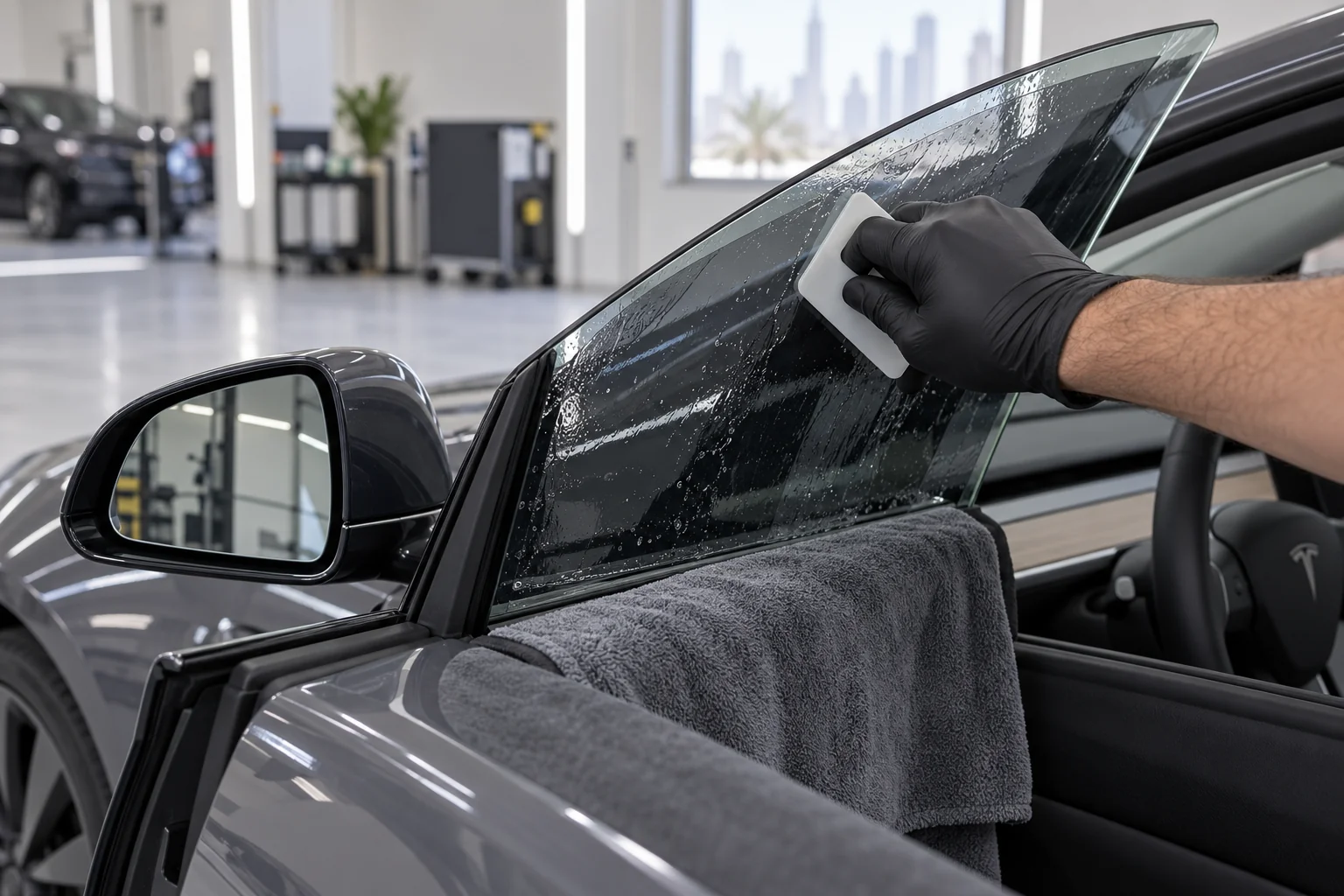
Tesla’s Model 3 window instructions explain the slight glass movement when a door opens or closes. Fitting and aftercare must account for that behaviour.
Inspect and protect
Review glass condition and window operation. Protect switches, trim, upholstery and nearby electronics before wet preparation. A pre-existing window fault is not corrected by tint.
Prepare and fit the film
Clean the accessible glass edges and remove old adhesive where agreed. Use a suitable cutting method, clean tools and the film’s specified mounting solution. Shape and fit to the actual pane.
Finish without forcing the edge
Controlled squeegee work removes excess fluid. Check corners and the agreed clearance without forcing a creased sheet into place. Rear-screen heating and antenna elements need particular care.
Review and hand over
Inspect the view and finish together. Explain normal door use, cleaning restrictions and the review process while the film dries. Keep the named product and fitting details with the invoice.
Film, shade and usable glass
Compare a named film for each window
Choose the product for the panes you are treating, rather than assuming one darkest film belongs everywhere.
Side and rear solar-control film
Discuss the desired appearance and documented performance. Check the exact series, available shade and suitability of the existing glass. Compare 3M film options and verification alongside the ceramic film choices. Request the exact available series rather than a brand-only promise. For a lighter finish, see our clear and light film comparison. These product comparisons do not establish compatibility with your Tesla roof.
Front-glass requests
Windscreen work needs separate application and current road-use checks. Camera viewing areas, visibility and the film maker’s instructions must be respected. It is not included simply because a quote says full car.
Electronics and connectivity
Check the proposed product’s construction and application data rather than accepting a universal no-interference promise. Keep camera and sensor viewing areas clear and report existing faults before work.
Know what happens after fitting
Written cover and practical aftercare
Your Tesla quotation identifies the warranty duration, provider and terms for the selected film and fitting. Nano ceramic cover is confirmed for the quoted product rather than a universal five-year package promise.
A film warranty is separate from Tesla’s vehicle warranty. Glass breakage, roof work, labour and removal costs must be addressed by the actual terms rather than assumed to be covered.
Keep the important details
- Film
- Manufacturer, exact series and fitted shade
- Work
- Included panes, removal and fitting date
- Cover
- Provider, covered defects and exclusions
- Care
- Door use, cleaning and review instructions
Collection and drying are different
Plan for a few hours of workshop time, subject to the agreed job. Some application moisture can remain after collection. Follow the selected film’s instructions instead of using one curing deadline for every product.
Raise concerns without touching the film
Photograph a persistent mark, crease or lifting edge and send its location and fitting date. Avoid pressing or peeling it. Tesla’s glass-care guidance also warns against scraping and abrasive cleaning around glass and rear heating elements.
Before you choose
Tesla tinting questions
How much does Tesla window tinting cost in Dubai?
Our Tesla fitting estimates range from AED 500–1,000 for dyed film, AED 1,000–2,000 for carbon and AED 1,500–3,000 for ceramic options. The exact film, model year and included panes determine the quote. Roof glass, windscreen work and old-film removal are assessed separately, with the final VAT-inclusive total agreed before fitting.
Is the Model 3 or Model Y roof included?
No. A side-and-rear window quotation does not automatically include the roof. The existing glazing, selected film and its application guidance need a separate compatibility review. Roof film may not be recommended, and keeping the original glass unchanged remains an option.
Can I choose a light film rather than a dark shade?
Yes, discuss the available light-film options for the required windows. Compare the exact product performance and the finished film-and-glass light transmission. A lighter appearance alone does not establish suitability for every pane or road use.
Will tint increase my Tesla driving range?
We do not quote a battery-range gain from tint fitting. Solar-control film can help manage transmitted sunlight, but real energy use also depends on weather, climate settings, speed and other conditions. Choose it for the documented film performance and comfort priorities.
How are the frameless door windows handled?
The fitting plan accounts for the glass moving slightly when a door opens or closes. Existing operation and edge clearance are checked, trim is protected and the handover explains how to use the doors during initial bonding. A pre-existing window fault needs separate attention.
How long does a Tesla tint appointment take?
Allow a few hours for a typical multi-window fitting, then confirm the slot for your model and agreed work. Old-film removal, access and rear-glass coverage can change workshop time. Full drying continues after collection and follows the fitted film’s instructions.
Does window tint have a warranty?
The Tesla quotation must identify the applicable film and fitting warranty, duration, provider, exclusions and claim contact. Nano ceramic cover depends on the quoted product and terms. Roof-glass or vehicle damage cover must not be assumed from a film warranty.
Can old or peeling tint be replaced on one window?
A single affected pane can be assessed without automatically replacing every window. Product matching, old adhesive and the glass condition affect the result. Rear-screen removal needs care around heating and antenna elements. Any charge and proposed work are agreed before removal.
Workshop fitting in Al Quoz 4
Get a quote for your Tesla’s glass
Send the model, year, windows you want covered and whether old film is fitted. Add roof or rear-glass photos if those areas concern you. We will discuss the film choices and agree the work before an appointment is confirmed.