Manufacturer source check completed . Product figures below retain their published glass and test conditions.
Car heat-control tint can reduce solar energy entering through treated glass and improve comfort in direct sunlight. It does not make a parked car stay cool, repair weak air conditioning or guarantee a particular fuel saving. Choose it by the exact film’s specifications, the windows covered and the view you need from the driver’s seat.
Can tint really cut AC use by 30%?
There is no sound basis for promising every driver a 30% reduction in AC use from an unspecified tint installation. “AC efficiency”, compressor power, cooling load and time spent running the AC are different measurements. A percentage is only useful when the claim identifies which one was tested and under what conditions.
Solar-control film can reduce part of the heat the AC must remove. That is a reduction in the cabin’s cooling load; it does not automatically improve the mechanical efficiency of the compressor or refrigerant system. A car with less solar gain may still need its AC continuously in hot, humid weather.
What a vehicle study actually measured
A specific windshield, a specific test
A 2013 NREL study of solar-control PVB windshield glass combined outdoor vehicle tests in Colorado with cooldown and driving simulations. It reported an average cabin-air reduction of 1°C and a dashboard-surface reduction of 3.5°C in its test, with a potential 4% reduction in AC power from its analysis.
Fuel-economy and EV-range outcomes were modelled for specified vehicle and drive-cycle assumptions. They were not measured fuel savings from a customer’s aftermarket tint installation.
What this evidence supports it supports the principle that solar control can reduce cooling demand. It does not establish the results of aftermarket side-window film on your car in Dubai, and it is not a replacement savings promise.
TSER tells a different story from infrared rejection
Sunlight includes ultraviolet, visible and infrared radiation. A film specification may describe one part of that spectrum or the overall solar energy passing through a glazing system. Comparing the biggest percentages without their definitions can lead to the wrong choice.
Use TSER to compare overall solar control on equivalent glass and VLT to compare visible brightness. Infrared and UV values answer narrower questions. The UV, infrared and solar-metric comparison explains their definitions and why the percentages cannot be interchanged. For clear-film choices and UV-specific limits, see the UV protection guide.
The International Window Film Association’s solar-control guide explains these glazing measurements. Compare the same metric, on the same glass, at a similar VLT.
A high IR number can sit beside a lower TSER
The same CR BLK 70 film has different filmed-glass ratings on different glass in 3M’s Crystalline technical sheet, Revision F, August 2025, page 2.
| Metric and meaning | 6 mm automotive green glass 73% baseline VLT |
6 mm clear glass 89% baseline VLT |
|---|---|---|
| VLT Visible light transmitted through filmed glass |
64% | 78% |
| TSER Total solar energy rejected by the rated glazing |
51% | 43% |
| IRER Infrared energy rejected over 780–2,500 nm, including inward heat from absorbed IR |
65% | 63% |
| IRR Rejection over 900–1,000 nm on film with liner alone |
97% on the separate film-only basis, without glass | |
3M describes these as estimated, typical reference values. The table preserves its specimen distinctions. None of these percentages predicts an equal reduction in cabin temperature, AC consumption or fuel use.
This is a worked reading example from a manufacturer’s data sheet, not a stock listing or a recommendation that this shade is suitable for every window.
Heat control with a lighter view
Compare clear and light window films before choosing darkness
Heat rejection does not require the darkest available shade. Some solar-control films transmit a high proportion of visible light while reducing solar energy through the rated glass. The useful comparison is the exact product, its published VLT and TSER, and the finished view through your own windows.
“Clear” does not mean invisible, colourless or 100% light transmission. A light film can still change the glass colour, reflect interior lighting and reduce the amount of visible light reaching your eyes. Ask what the description means for the specific product offered.
| Named product | Filmed-glass VLT | TSER | Published test basis |
|---|---|---|---|
| 3M Crystalline CR BLK 80 | 88% | 32% | ANSI/NFRC 200 |
| 3M Crystalline CR BLK 70 | 78% | 43% | ANSI/NFRC 200 |
| 3M Ceramic IR 70 | 78% | 41% | EN 410 |
Sources are 3M Crystalline Revision F, August 2025 and the Ceramic IR bulletin, January 2021. Values are manufacturer references, not current stock confirmation. The standards differ, so the two-point TSER difference between the 70 variants is not a controlled head-to-head result.
Within the Crystalline reference, the lighter CR BLK 80 transmits more visible light and has a lower TSER than CR BLK 70. This is a genuine choice between those documented properties. It does not establish which one is suitable for your window or predict a fixed change in cabin temperature.
For the actual product generation and quotation details, use the Crystalline product page and Ceramic IR product page. Ask for the exact supplied code before transferring a figure from a brochure to your purchase.
In bright daylight
A lighter film may preserve the open appearance you want while providing documented solar control. It usually sacrifices some visible-light glare reduction compared with a darker option in the same range. Decide whether your concern is heat at the seat, bright visible light or both.
After sunset
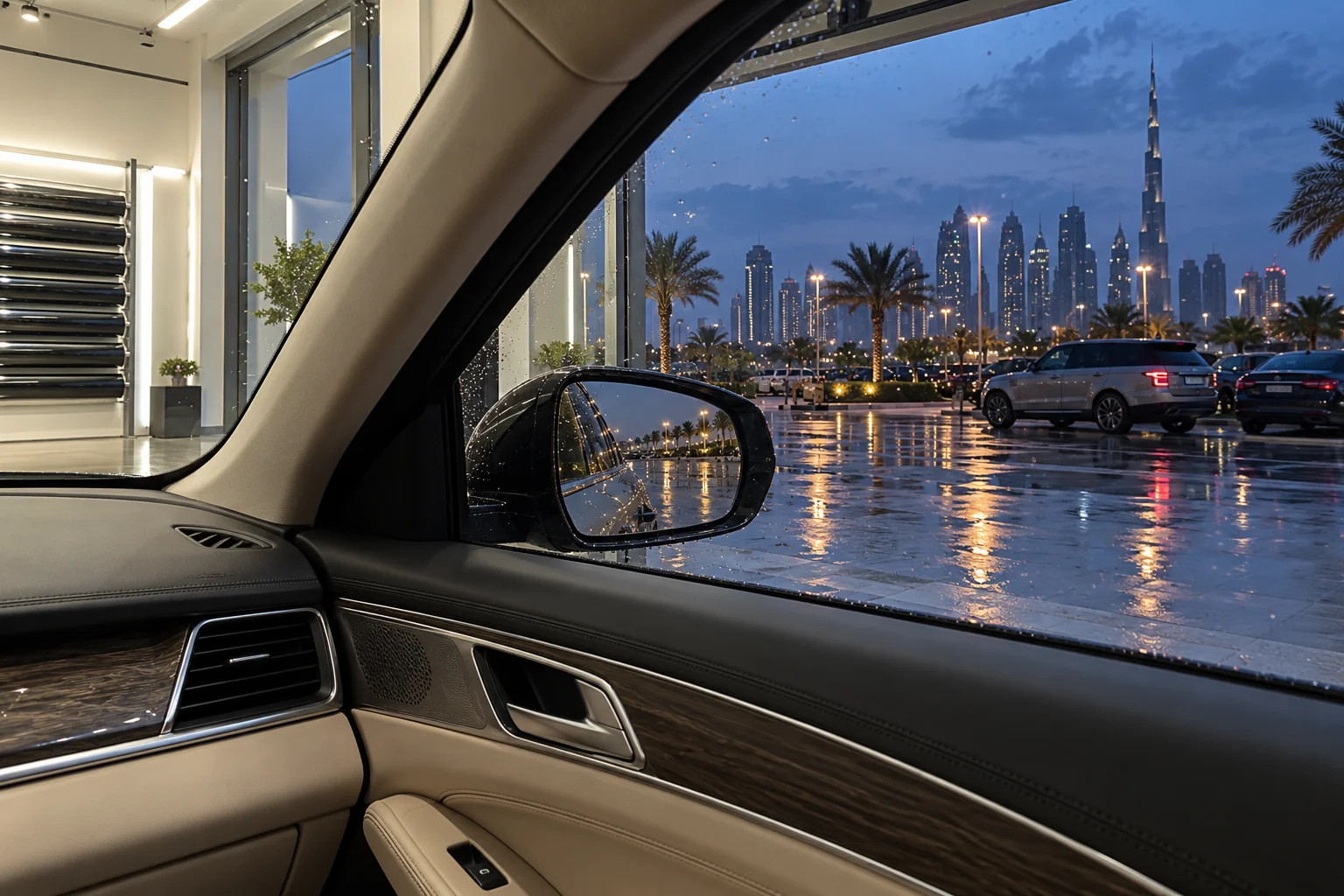
Less outside light makes any additional reduction more relevant. Look at the side mirror and useful exterior details from the normal driving position. Do not choose film on a promise that it improves night vision or automatically makes headlight glare safer.
In rain or a dim car park
Wet surfaces, droplets and reflections change the view. A bright showroom sample is not a complete check. Ask how a proposed film affects the view when the exterior is dimmer than the cabin, and report any existing difficulty before fitting.
Check the finished glass, not the shade name
The figures above already include reference glass. They are not film-only transmission values to multiply directly by your own glass reading. Factory-coloured panes and an old applied film change the starting point. Confirm what is present and assess the complete proposed assembly.
A VLT meter addresses visible transmission, not every aspect of optical quality. Haze, reflections, scratches, installation defects and the driver’s viewing needs also matter. A clean-looking sample cannot establish compatibility, regional warranty coverage or road-use permission.
A practical viewing check before booking
- Name the window and the problem. Explain whether you want to preserve front-side visibility, reduce sun at a passenger seat or replace a dark existing film.
- Review a suitable sample while stationary. Compare the outward view and interior reflections with the installer. Do not drive with loose samples or makeshift temporary coverings.
- Agree what will be verified. Record the product, existing glass, included panes and final visibility check. Discuss any uncertainty before fitting rather than treating a sample as a performance certificate.
Light-film suitability still needs a window-specific road-use check. A nearly clear appearance is not an exemption, and a roof, side window and windscreen are different applications. Consult the Dubai and UAE tint rules guide and current authority requirements for the vehicle. This product comparison does not approve a film for a particular window.
If UV protection is the main goal, compare the exact UV specification separately in the UV protection guide. High UV rejection does not make a film an equivalent heat-control product, and neither figure guarantees the view you need at night.
Why a tinted parked car still gets hot
Window film is passive solar control. It does not provide refrigeration or remove stored heat from the seats and dashboard. Some sunlight still enters, and heat also reaches the cabin through other windows, the roof and the body. During a long parking period, the interior can remain very hot even when the treated glass admits less solar energy.
While the car is parked
Exposure time, sun angle, parking direction, glass area, existing glazing and shade all influence the result. A cooler seat surface in one test does not mean the cabin air is comfortable or safe.
When the AC is running
The system removes heat while sunlight continues adding it. Film can help with the solar part of that load, but cooling still depends on airflow, humidity, system condition and temperature settings.
Never use tint, a sunshade or cracked windows as a reason to leave a child or pet in a parked car. NHTSA’s parked-car guidance warns that shade and partly open windows do not make it safe to leave a child unattended.
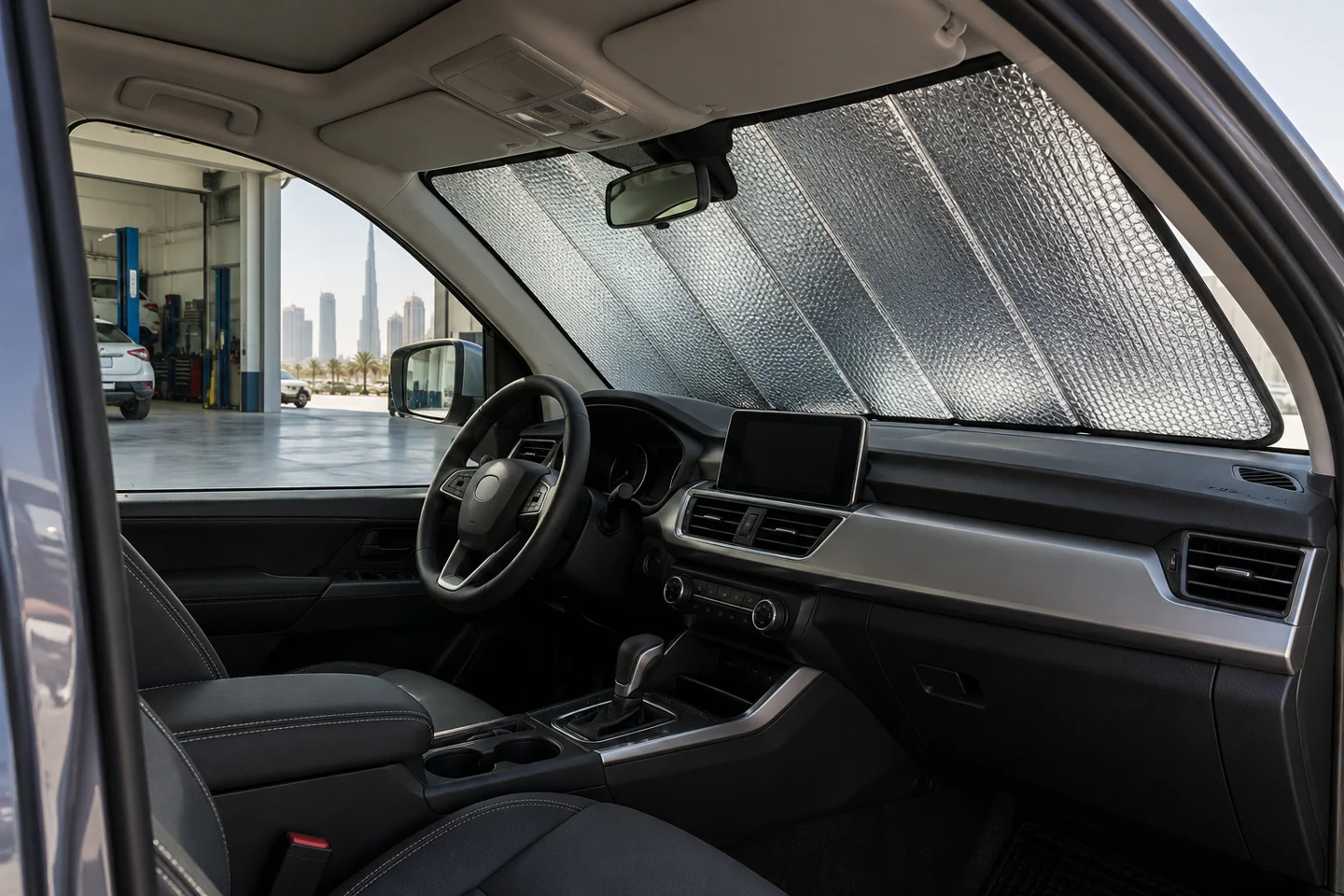
For everyday comfort, combine an appropriate film with shaded parking where available and a correctly fitted parked-car sunshade. Follow your vehicle’s instructions for ventilation and AC use. Ford’s guidance recommends briefly releasing accumulated hot air rather than continuing to drive with windows open and the AC running.
Fuel savings, EV range and payback need their own evidence
A reduction in AC energy is not the same as the same percentage reduction in total driving energy. Propulsion and other vehicle loads still consume fuel or electricity. How much the AC contributes changes with the weather, trip length, traffic and control strategy.
For that reason, a universal 10–15% fuel or battery saving is not a reliable basis for buying tint. A longer range per charge is also different from a longer battery service life. Film specifications alone demonstrate neither.
If AC represented 20% of a trip’s energy and its energy use fell by 10%, the change in total trip energy would be 2%, assuming everything else stayed equal.
20% × 10% = 2%
These inputs illustrate the calculation only. They are not measured tint savings or a forecast for your vehicle.
Payback needs the installed cost and a credible annual saving. Without controlled, relevant consumption data, an exact number of months to recover the price is guesswork. Evaluate the film for comfort, visibility, product quality and the written warranty; treat any financial saving as unquantified unless it is properly measured.
How to compare two heat-control films fairly
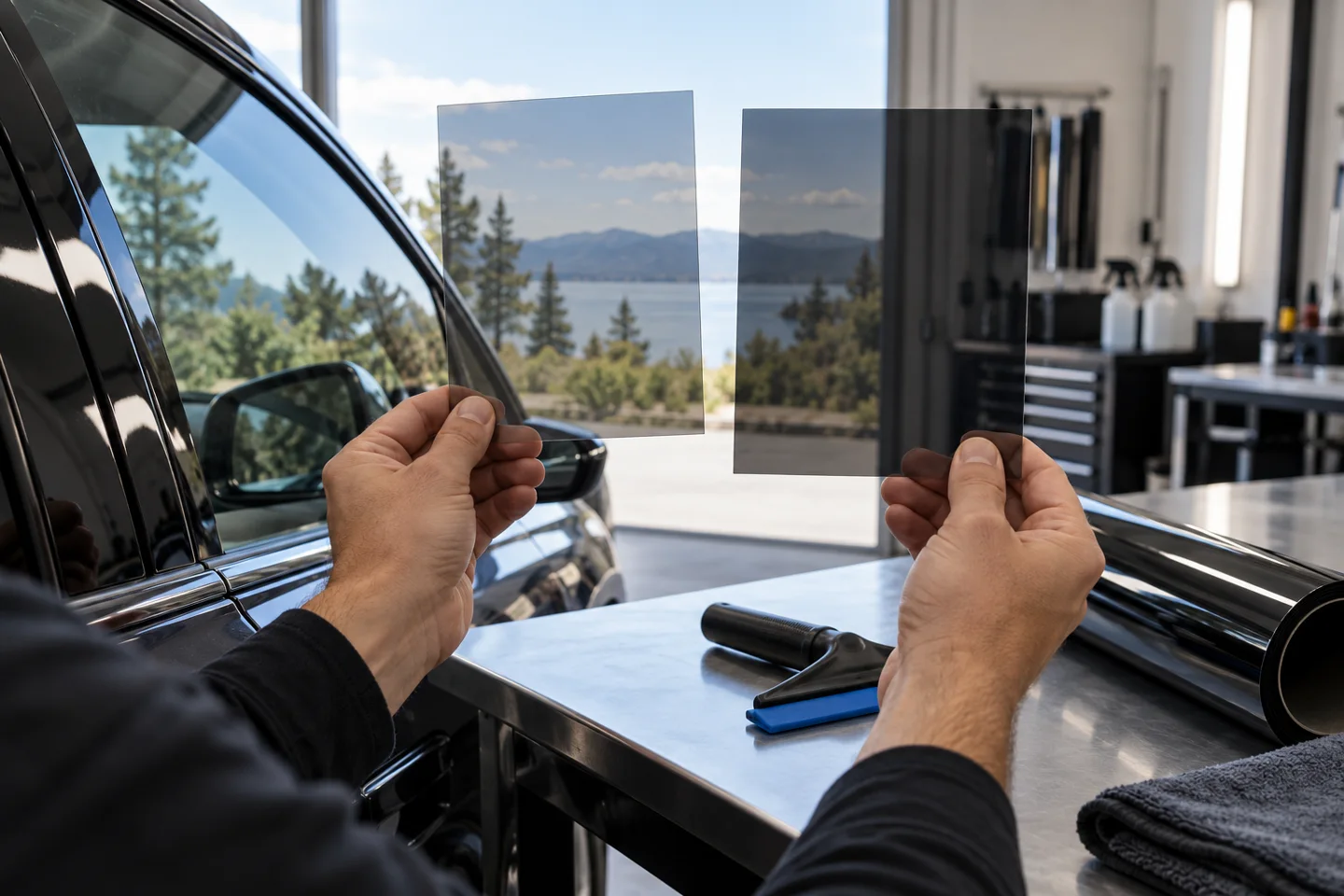
Ask for the manufacturer, series and exact shade before comparing prices. “Ceramic”, “nano” and “heat control” are broad descriptions; they do not identify a single performance level.
| Ask for | Why it matters |
|---|---|
| Exact product and shade | Connects the quote to a specific data sheet and warranty. |
| TSER and test glass | Prevents comparing figures measured on different glazing as if they were equivalent. |
| VLT on the stated glass | Helps compare solar performance at a similar level of visible light. |
| IR test range and method | Shows whether an impressive headline uses a narrow range or a broader infrared measure. |
| Windows included | A side-and-rear package does not treat the same area as a different installation. |
| Preparation, fitting and cover | Clarifies old-film removal, VAT treatment, installation scope and written warranty terms. |
Check a sample from inside the car, including shaded conditions. Darkness is not proof of better solar control, and a pleasing exterior finish does not establish comfortable night-time visibility. Confirm suitability for the specific vehicle, glass and window position before fitting; a product performance sheet is not road-use approval.
For buying options, see our ceramic tinting service and 3M Crystalline film page. The Dubai car tinting service covers packages and installation enquiries; this guide explains how to assess the performance claims.
What a heat-lamp demonstration can and cannot show
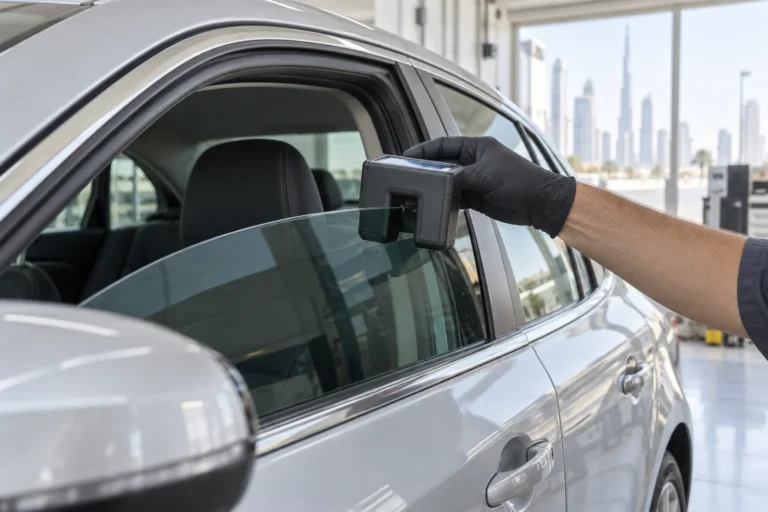
A demonstration can make a difference between samples easy to feel under one lamp. It is not a test of a complete car’s fuel use or parked temperature. Lamp spectrum, distance, exposure time, sensor position and sample glass can all influence what you see.
Ask whether both samples use the same setup. A handheld meter may measure a particular wavelength or band, while a lamp demonstration may emphasise a different part of the spectrum from sunlight. Use it as supporting information alongside the data sheet, not as a substitute for TSER or vehicle testing. Our tint performance testing guide explains the measurement limits and a repeatable recording method.
No original workshop heat, AC-energy or fuel-consumption dataset is published with this guide. The product table is manufacturer data and the vehicle study is external research. A proposed test method is not a measured result.
- Define the result. Measure cabin air, a named surface, AC energy or driving consumption. Do not swap one for another.
- Control the comparison. Keep vehicle, starting temperature, parking direction, duration, weather, AC settings and sensor location comparable.
- Repeat and record. Keep dated raw readings, repeat runs, instrument identity, calibration or reference-check status, sensor placement and stated measurement uncertainty. Report individual runs and their spread, not only the best result. A single before-and-after photograph or reading on different days cannot isolate the effect of the film.
A publishable comparison should identify the exact film and panes, unfilmed baseline, control arrangement, time-stamped weather and solar exposure, starting conditions, instrument limits and the calculation used. Surface temperature, cabin air temperature and consumed energy need separate records. If differences are similar to measurement uncertainty or weather variation, do not attribute them confidently to the film.
For a sample-level VLT check, the testing guide includes a nine-reading worksheet and CSV export. It records user-entered observations and repeatability. It does not calculate TSER or certify cabin cooling, fuel savings or road-use approval.
When the next step should be an AC check
Film is a solar-control upgrade, not an AC repair. If cooling is poor even out of direct sun, airflow is weak, or performance has suddenly changed, have the air-conditioning system assessed rather than expecting tint to solve it.
If the AC cools normally but direct sunlight feels uncomfortable through the side glass, comparing suitable solar-control films is a more relevant next step. Explain where you feel the heat, when you drive and whether the car already has film or factory-coloured glass.
Questions about heat-control tint
Does 99% UV rejection mean 99% heat rejection?
No. UV rejection concerns ultraviolet radiation, not all solar energy. Check TSER for the stated glass and compare it with the required visible light transmission.
Will lighter tint still help with heat?
It can. Some films are designed to reject solar energy while transmitting more visible light. Compare exact products at a similar VLT rather than ranking them by darkness alone.
Can you promise a fixed temperature drop?
No universal temperature reduction is justified. A meaningful claim must specify the vehicle, film, treated windows, test conditions, sensor position and whether it measures air or a surface.
Does heat-control tint make an EV battery last longer?
Reducing cabin cooling demand may affect energy used during a trip. That is different from proving longer battery life, and neither a fixed range increase nor a battery-lifespan benefit follows from the film’s IR rating.
Is a second layer of film a better solution?
Do not assume layering is suitable. It changes the final glass-and-film system, visibility and installation conditions. Have the existing film identified and discuss removal and replacement with the installer.