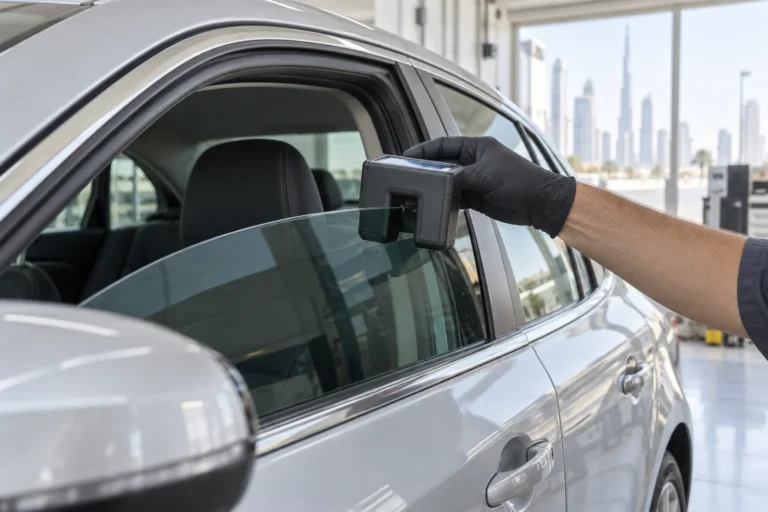
Peeling car tint needs an adhesion check, not extra glue. A small, clean edge on newly fitted film may be correctable by the installer. Film that is dirty underneath, folded, cracked or separating into layers usually needs replacing on the affected window. One peeling pane does not automatically mean a full-car re-tint.
Leave the loose edge alone
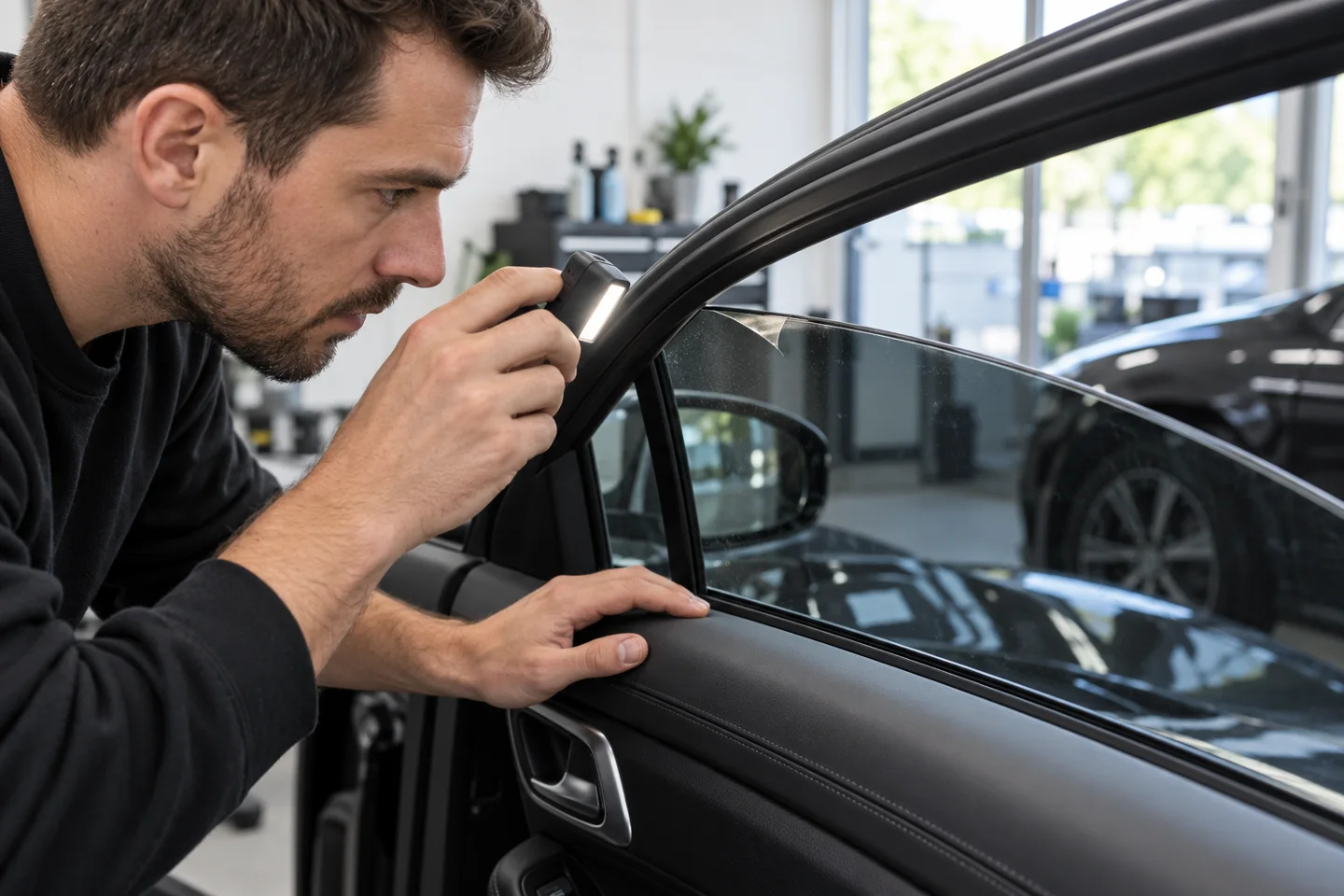
Take photos before touching it and contact the installer. If the damage blocks a clear view of traffic, pedestrians or mirrors, avoid driving until it has been assessed.
Peeling tint or normal drying
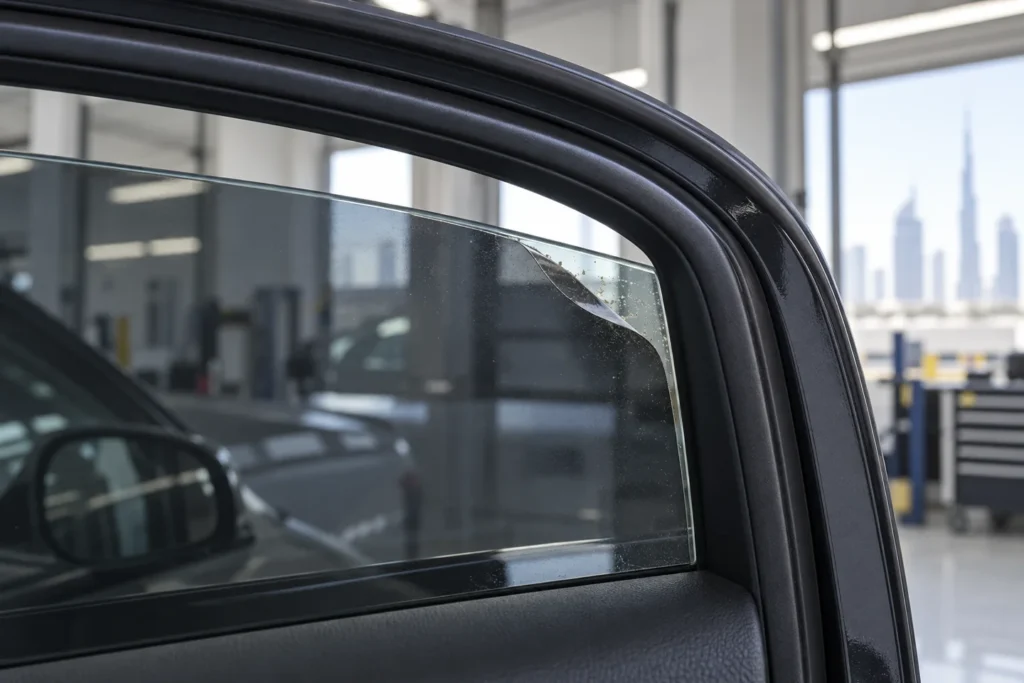
Peeling means the film has physically lifted away from the glass, or its layers have separated. You may see a curled corner, an exposed adhesive edge or a flap that catches the window seal. Do not run a fingernail underneath to test it: lifting the edge further can introduce dirt and remove the chance of a simple correction.
A lifted edge
A visible curl, fold or opening at the film boundary needs an installer’s assessment. Do not wait for it to disappear just because the installation is recent.
Moisture beneath flat film
Haze or water pockets after installation can be part of drying. Follow the film-specific care instructions and monitor progress without pressing the surface.
A thin, even clear margin at the top of a side window can be an intentional film cut. A pale border over the rear glass’s raised dot pattern also needs inspection before it is called peeling. The important distinction is whether the film is actually lifting or moving.
If the edge remains flat and the concern is pockets beneath it, see our guide to car tint bubbling. For scratches, uneven cuts and other defects, use the broader bad tint signs guide.
Why tint lifts at the edges
The location and timing help narrow the checks. They do not prove who caused the problem. An edge that lifts straight after fitting deserves a different investigation from brittle film that has been on several windows for years.
- Glass preparation and adhesion
- Contamination or residue can interrupt contact between the film and glass. The installer should look for debris beneath the lifted area and review the preparation and fitting process before deciding whether the edge can bond reliably.
- Contact with a window seal
- If the same edge lifts when the window moves, check the cut, clearance and channel condition. Replacing film without addressing rubbing or a catching edge can leave the original cause in place.
- Disturbance after fitting
- Opening a window too soon, picking a corner or dragging something across an edge can disturb newly fitted film. Tell the installer what happened; a useful assessment depends on an accurate history.
- Ageing or layer separation
- Widespread lifting, brittleness or layers coming apart can make local correction unsuitable. Age is context, not a fixed expiry date. There is no universal rule that every film must be replaced after five years.
The IWFA automotive education guide distinguishes the adhesive that attaches film to glass from adhesives that join film layers together. That distinction matters: pressing down an edge cannot restore a damaged laminate.
Dubai’s sun exposure belongs in the history, but heat alone is not a diagnosis. Nor does the word “ceramic” guarantee that an edge cannot lift. Product construction, preparation, installation, contact with seals and aftercare all need consideration.
Repair or replace the affected film
A repair is only useful if it leaves a clear, stable finish. The percentage of the window affected is not a reliable rule: a tiny folded or contaminated corner may need replacement, while a fresh clean edge may be suitable for a controlled correction.
| What you find | What to ask the installer | Likely route |
|---|---|---|
| Small lift on newly fitted film | Is the adhesive clean and the film uncreased? Is there a seal or fit problem? | Assess promptly for an edge correction; replacement if reliable adhesion cannot be restored. |
| Dirt or a permanent fold beneath the edge | Will correction leave contamination, distortion or a visible crease? | Usually replace the film on that pane. |
| Brittle film or layers separating | Is the failure local, or present across the pane and other windows? | Remove failed film and agree the replacement scope. |
| The same edge lifts again | Was seal contact or an incorrect cut addressed? | Resolve the underlying cause before re-fitting. |
| Rear-screen peeling near demister lines | What is the existing grid condition and removal risk? | Specialist removal assessment before pulling any film. |
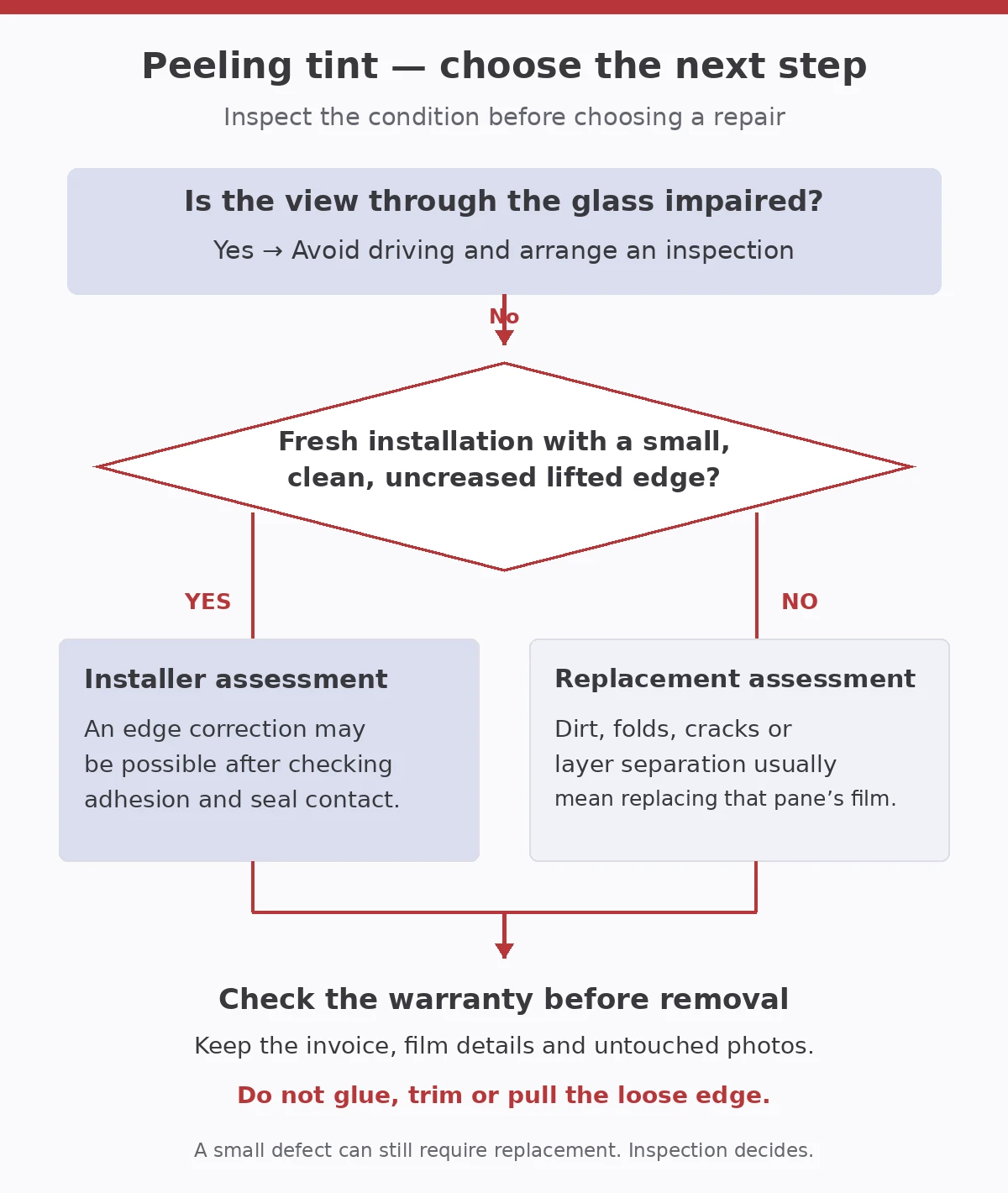
For example, a fresh top corner that has lifted without a fold is worth showing to the original fitter quickly. A corner with sand embedded underneath and a sharp crease is a different problem, even if it is smaller. A rear screen with splitting film needs a removal plan rather than an attempt to flatten every loose area.
If correction is not suitable, use the window tint replacement guide to decide between one pane and a wider retint, compare the complete job cost and choose new film. The removal service covers stripping the agreed panes and cleaning adhesive before any refitting.
Check the warranty before removal
Contact the business that fitted the film before authorising another workshop to remove it. Film defects, installation workmanship and accidental damage may be handled under different terms. A photograph can help arrange an assessment, but it does not establish warranty eligibility.
- Keep the evidence intact.Photograph the whole window and the lifted edge in daylight. Note when you first saw it and whether the area is growing.
- Find the installation details.Gather the invoice, date, film brand and series, warranty certificate or registration, and the written care instructions.
- Ask for a decision before work starts.Confirm who handles the claim, whether removal and reapplication are included, which windows are covered and whether any charge needs approval.
Manufacturer terms vary by product and market. For example, 3M’s published US and Canada warranty asks for an installer assessment, the warranty card and original invoice. That document is not a UAE warranty promise; use the certificate supplied with your own installation and confirm the local route.
If the original installer has closed, contact the film manufacturer’s regional support with the documents you have. If there is no usable paperwork, an inspection can still establish a removal or replacement scope, but free work should not be assumed.
Rear-window peeling needs extra care
The rear demister is a functional part of the glass assembly. Pulling old film can lift conductive material from its lines, even when the remaining coloured trace looks intact. Frost Fighter’s technical bulletin on tint removal explains this risk and why appearance alone cannot confirm electrical condition.
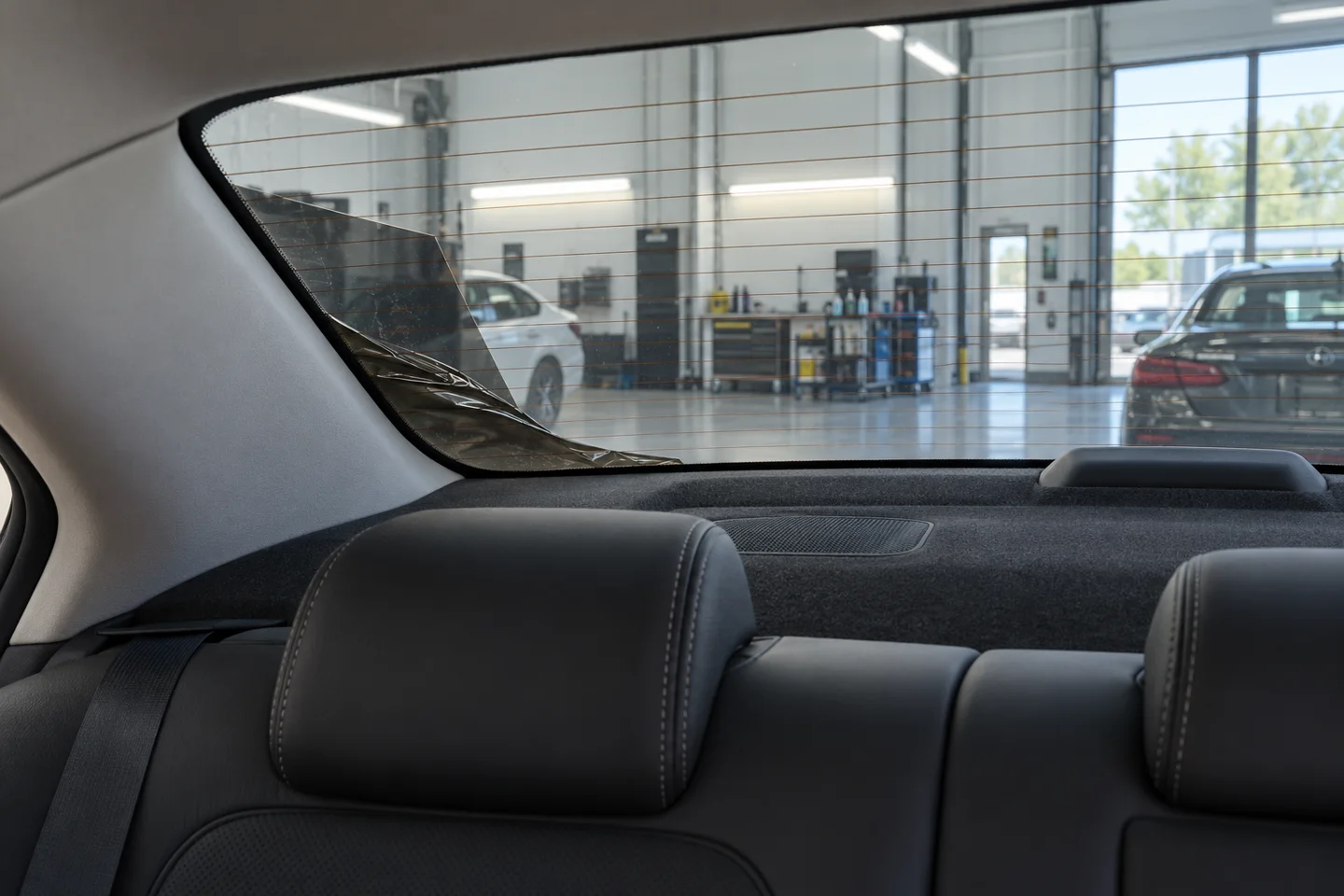
Ask the workshop to record existing demister operation and visible damage before removal, and discuss any antenna lines or special coatings. Agree how the glass and grid will be checked afterwards. Do not scrape the lines, pull a loose sheet to see how easily it comes off or assume a careful removal can carry a zero-risk guarantee.
Peeling does not by itself mean the entire rear windscreen needs replacement. The film, glass and electrical grid should be assessed separately. For professional removal options, see our car window tint removal service.
What to do before your inspection
Keep it undisturbed
- Take clear photos and keep the installation record.
- Avoid unnecessary window movement if the edge catches.
- Tell the installer about any recent glass, seal or door work.
Avoid quick fixes
- Do not add glue, tape, nail varnish or another layer of tint.
- Do not trim the edge or puncture nearby pockets.
- Do not use a heat gun or household solvent to attempt a repair.
After correction or replacement, get the specific window-use and cleaning instructions in writing. As a product-specific example, 3M Malaysia’s care guidance says to avoid opening windows for the first 48 hours, wait at least seven days before cleaning and avoid picking edges or abrasive cleaning tools. Your installer should confirm the instructions that apply to the film fitted to your car.
Check the finish with the installer before leaving. Confirm that the affected edge is seated and that the view is clear apart from any explained drying effects. Arrange a follow-up if the same corner lifts again rather than repeatedly pressing it down.
PLAN THE NEXT STEP
Show us the peeling edge
Send a full-window photo, an edge close-up, your car model and the installation date. We can help arrange an inspection and clarify whether the next step is an installer correction, a warranty enquiry or removal and replacement.
Questions about peeling car tint
Can I glue a peeling corner back down?
No. Household glue is not a substitute for the film’s adhesive system. It can leave visible marks and complicate removal. Leave the corner untouched for an installer’s assessment.
Does a small peel mean all the tint must be replaced?
No. The affected pane can often be treated separately. Check the remaining film’s condition and the availability of a matching product before agreeing to a wider re-tint.
Will a lifted edge settle as the film dries?
Do not assume that a curled or detached edge is normal drying. Contact the installer promptly. Moisture beneath otherwise flat new film is a separate issue.
How much does peeling tint repair cost?
The scope depends on warranty coverage, the number of panes, removal difficulty and the replacement film. Ask for an itemised quote separating removal, adhesive cleanup, new film, installation and VAT. Rear-screen grid risks should be discussed before work is approved.
Does purple or peeling film prove the UV protection is gone?
Appearance alone cannot quantify UV transmission or remaining heat-control performance. Peeling is a reason to assess adhesion and visibility; avoid assigning a performance percentage from colour or a photograph.